Showing posts with label ruminant. Show all posts

Thursday, November 25, 2021

Hay Production Urgency


In countries with four seasons, in winter, plants grow very slowly and even stop growing, so hay is used as a feed supplement, while in Indonesia in the dry season, grass is also limited forage, so to maintain livestock performance, additional feed such as hay should be used. By making hay, animal feed becomes durable so that it can be used as a source of feed when supply is reduced. Dry and compacted conditions make hay easy to store and use. In breeding-oriented farms, the quality of feed is usually not as good as in fattening-oriented farms. Breeding duration is longer than fattening is one of these considerations, because feed is the highest cost component in livestock business.

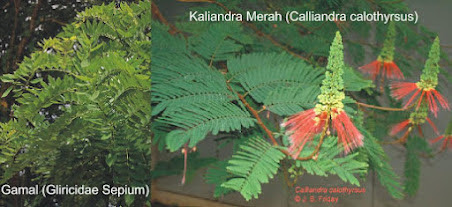
Due to various factors such as geography and labor conditions, a number of countries even have to import animal feed, especially the hay. The United States, for example, exports no less than 700,000 tons of hay annually to Japan, Taiwan and Korea. Leaves of leguminoceae such as indigofera, calliandra and gliricidia are potential sources of ruminant feed for the production of hay. Besides being planted specifically for the production of hay, these legumes can also be used as energy plantation or biomass plantation. The integration of energy plantation or biomass plantation with livestock businesses, especially the production of animal feed in the form of hay product, is a very interesting combination.

In addition to the export market, the domestic or local market is no less interesting. Areas with large areas of land can be used as centers for hay production, which is then distributed to a number of ruminant livestock centers. Hay is dry and compacted (densified) so that it is easy to distribute even over long distances. This is different from silage, which is wet, so it cannot be compacted like the hay. With the fulfillment of feed, the performance of ruminant livestock business can be maintained. In energy plantation or biomass plantation, wood can be processed into energy products such as wood chips, wood pellets, wood briquettes and sawdust charcoal briquettes, or non-energy products such as particle board. That means all parts of the tree can be utilized.

Saturday, July 31, 2021

Sheep and Goat Farming Based on Energy Plantation

The need for food, especially animal protein, continues to increase along with population growth. Meat, especially from sheep and goats, is a source of animal protein that is a favorite of many people. It is estimated that the world's population will reach 10 billion in 2050 and especially Indonesia's population of 319 million in 2045. Greater Jakarta or Jabodetabek is the most densely populated area in Indonesia so that the need for food, especially animal protein, lamb and goat meat is getting bigger. Currently these areas bring in the needs of lamb and goat meat from Central Java, East Java and Lampung alternately depending on the availability of supplies for each area. This is because no single region is able to meet the needs of Jabodetabek alone. Or if these areas can always supply the needs of Jabodetabek on a regular basis then the business can continue to be sustainable and stable but of course it can overcome the obstacles in the sheep and goat business.

It turns out that a number of problems surround the sheep and goat business including the availability of seeds, breeding skills, availability of feed, marketing chain and so on. Simple things such as the availability of seeds. Although breeders in general have not used superior seeds, the availability of seeds is also a problem because many productive females are slaughtered. This is mainly due to the business competition factor, because the price of males is more expensive which makes female goats slaughtered even though this disrupts the sustainability of the livestock business. Aspaqin (Indonesian Aqiqah Entrepreneurs Association) noted that 63% of the female members were slaughtered from a total of 331,693 slaughtered tails. Of course there are still many who are not recorded because there are still many aqiqah entrepreneurs who are not members of the Aspaqin. In addition, there are also many restaurants for eating lamb dishes, such as satay that still slaughter productive female goats.

Of course it would also be better if the sheep and goat that became the seed was the preferred or superior sheep and goat so that the quantity and quality of meat was better. The feed-to-meat conversion factor in superior sheep and goat is also higher, making it more profitable. And this is mainly the responsibility of research institutions. Dorper sheep and Bohr goats are the superior types of sheep and goat. However, there is an easier way to maintain the sustainability of the sheep farm, namely by reducing or even prohibiting the slaughter of productive female sheep and goat. In this way, the continuity of sheep and goat seeds can be maintained and even more developed. To be able to realize this, of course, requires efforts from all parties. Providing incentives or sanctions can be done to support this.

The problem of skill of the breeder is also another obstacle. Most of the sheep and goat breeders are small farmers with traditional farming techniques. This makes it difficult when used to meet routine requests, especially large quantities. Modern farming patterns must be carried out to become a reliable livestock industry as the foundation of the livelihood of these farmers. Only with this effective pattern and efficient farming can be implemented. With good preparation supported by these skills, sheep and goats livestock industry players are able to carry out sheep and goat  farming intensively so that they are expected to be able to supply the meat needs.

Sheep and goats farming is not only an effort to fulfill food sources, especially animal protein in the form of meat and milk, it is also a part of perfecting Islamic law. The population that continues to increase means that Muslim babies born to their parents are ordered to perform aqiqah. In addition, the celebration of Eid al-Adha which is held every year also requires sheep and goats as a sacrificial animal. Sheep even as sacrificial animals have many advantages over other livestock even though they are both halal such as goats, camels and cows. In the verse (Qur’an 6:143-144), the eight pairs of animals (4 pairs) are two (pairs) of sheep, a pair of goats, a pair of camels and a pair of cows. Rules in the Qur'an, something that is mentioned first has precedence over what follows. Another indication of the virtue of sheep can also be found in the event of Qurban, namely when Prophet Ibrahim was ordered by Allah SWT to slaughter his son, Ismail, then by Allah SWT saved Ishmael and replaced him with a large sheep. Then we commemorate this event every year and become the law of Qurban on Eid al-Adha every 10 Dzulhijah.

The development of energy plantations, which is increasingly being echoed lately, with the main product in the form of wood for the production of biomass fuel, both wood chips and wood pellets, will also produce waste or by-product in the form of leaves. The leaves of calliandra or gliricidia are rich in protein content so they are very good as a source of animal feed for the sheep and goats. The number of leaves produced will also be very large so that the potential for sheep and goat farms to be developed will also be very large. Even to meet the needs of sheep and goat seeds, any import is allowed under current regulations. This can also be very similar to a large capacity beef cattle feedlot, where cow seed are imported from Australia, read here for more details. The focus of sheep and goat fattening can also be very effective and efficient or has advantages such as in beef cattle if it is carried out in Indonesia. Leaf waste from energy plantations can be a potential feed.

In addition to domestic consumption, sheep and goat can also be used as an export commodity. For domestic purposes such as qurban and aqiqah, generally small sheep and goats are used, which weighs around 25-35 kg. As for the export market, sheep and goats needs usually require a weight of 35 kg and above. The export market can be a separate segment and is also basically the choice of the farmer himself. Sheep and goat farmers from Indonesia have also exported sheep and goats to a number of countries including Malaysia, United Arab Emirates and Timor Leste as shown in the table above.

Friday, July 30, 2021

Beef Cattle Fattening (Feedlot) Based on Energy Plantation

The photo taken from here
Indonesia has the advantage of intensively fattening cattle. A number of factors such as the availability of agricultural wastes, agro-industrial wastes, forestry wastes and low labor costs, support these advantages. In addition to the price of seed cow, the feed factor is indeed the next determining factor. With these advantages, Indonesia can focus on fattening beef cattle. If this is done, it is not impossible for meat self-sufficiency or at least meat imports to be reduced. The increasing import of buffalo meat from India should be gradually reduced, in line with the readiness of the domestic beef cattle fattening industry. It takes time and effort is not simple, obviously but must be done.

Import of Seed Cows from Australia, photo from here
Ideally, seed cows are produced domestically, this is because Indonesia has the potential for this in the form of potential grazing areas in eastern Indonesia and palm oil plantations. But the fact is that the implementation is still very minimal or even those who are focused on working in this field do not yet exist. Based on a number of studies that cattle breeding is only effective and efficient in grazing areas. This is what makes Australia superior in the supply of seed cows. The large place and long time in the pasture are obstacles for Indonesia to be independent of seed cow. The export destination of seed cow from Australia is Indonesia and mainly supplied from northern Australia. This type of grass that lives in Australia is also not very suitable for fattening, so exporting it is one of the best options. Meanwhile, cattle fattening (feedlot) in Indonesia only takes 100-120 days with the use of limited cage space. The cattle population in Australia is quite large or almost the same as the total population or the ratio is 1 person to 1 cow, while in Indonesia it is much smaller. Cooperation in supplying seed cows from Australia to be fattened in Indonesia has also been going on for decades. There are efforts to reduce the import of seed cow, but it seems that it will still take a long time.

The development of energy plantation with the main objective of producing wood pellets or biomass fuel, has waste or by-product in the form of leaves. The leaves are very good for cattle feed especially with high protein content. With an area of thousands or even millions of hectares that has been declared, the by-products or leaf waste produced will also be very large, of course. With this alone, if Indonesia wants to focus on fattening, the opportunity to become a leader in the cattle fattening industry in Asia and even the world will be even greater. If that happens, the import of buffalo meat from India and beef from Brazil can be reduced or even stopped altogether. In addition, even when there is excess meat production, meat export is also very possible, including by processing the meat so that it provides greater added value. 

Sunday, June 6, 2021

Biomass Cofiring, Energy Plantation and Ruminant Animal Husbandry

Biomass cofiring with coal in coal power plants in Indonesia as a PLN (Indonesia electricity state owned company) program to support the use of renewable energy, especially biomass, could be the closest momentum for energy plantations. The program is also an effort to achieve the target of using renewable energy of 23% by 2025, while until now it is still less than 5%. In 2020 the cofiring program has been initiated with a target of 37 coal power plants but in practice 20 coal power plants have been implemented. While in total there are 114 coal power plant units owned by PLN that have the potential for cofiring, spread across 52 locations with a total capacity of 18,154 megawatts (MW) as a target of completion in 2024. The details consist of 13 coal power plant locations in Sumatra, 16 coal poer plant locations in Java, 10 locations in Kalimantan, 4 locations in Bali, NTB and NTT, 6 locations in Sulawesi, and 3 locations in Maluku and Papua. Meanwhile, the cofiring ratio ranges from 1-5% biomass with an estimated biomass requirement of 9-12 million tons per year.

 And recently there has also been an agreement between PLN and Perhutani (Indonesia forestry state owned company) and PTPN III (Indonesia agriculture state owned company) to supply biomass for the cofiring program, for further information, please read here. In this case, PLN is the owner of the coal power plants, while Perhutani owns the resources of industrial plantation forest areas both in Java (Perhutani) and outside Java (Inhutani) which can be developed as energy plantations or energy forests. Likewise with PTPN III with its land which can also be used for this energy plantation. Gliricidia sepium and red calliandra (calliandra calotyrsus) are two species of fast-rotating crops that are most likely to be used for these energy plantations. If every 4,000 hectares produces a production of 10,000 tons / month of wood pellets or 120,000 tons / year, at least 400,000 hectares are needed to meet the 1-5% cofiring target which is equivalent to 9-12 million tons per year. The potential of gliricidia leaves or calliandra will also be very abundant. And it should also encourage the growth and development of the ruminant industrial sector. Moreover, if in the future PLN increases its cofiring portion, for example 6-10% or even 20%, of course the energy plantation needed will be very large, as well as the abundant potential of gliricidia leaves or calliandra.

The Covid-19 pandemic is still ongoing with the increase in cases getting bigger in Indonesia and there is no sloping curve yet, even positive cases have penetrated more than 1 million people. It is predicted that this pandemic will become a long-term problem with indications, among others, that new variants are found so that the vaccine that has been prepared is not or less effective and the emergence of a second wave of covid outbreaks even after vaccination has forced cities and even the state to lock down. . How almighty is Allah SWT with all His will, which should further strengthen our iman and taqwa. The prolonged condition of the Covid-19 pandemic makes people afraid and avoids crowds or gatherings including professional activities such as offices and industry. This condition will also encourage the growth of efficient business activities by using various existing technologies.

Technology-based and efficient industrial developments should be the focus of the government to survive and even maintain sustainability in order to maintain the supply of goods needed by the community. Population concentrations in an area must also be reduced and properly distributed. Big cities are becoming less and less attractive. Efficient production units must be increased in number as well as their distribution should be more even. Outskirts, villages and even mountains are increasingly being enjoyed. The closer to nature or natural resource-based businesses, the more they enjoy it along with the distribution of business locations that is more evenly distributed or not accumulated in big cities. More and more world citizens also want a fairer system in regulating their lives.

Ruminants (sheep, goats and cows) farms are a potential business especially supported by the utilization of leaves waste from these energy plantations. The locations for these energy plantations are generally in forest areas which are quite far from urban areas. The leaves of gliricidia or calliandra can be processed into various forms (concentrate, hay, pellets, briquette, etc.) according to request or use. With the use of good technology, the leaves waste can be used optimally so as to support the progress of ruminant farming. The farm will also be very good if it is made near energy plantations as a source of food. To get a complete feed composition, community empowerment can be done.    


Saturday, June 5, 2021

Wisdoms From the Work of Every Prophets & Messengers Who Graze the Sheeps

~ Ibn Hajar rahimahullah said, the ulema said, "The wisdom behind grazing sheeps before the time of prophethood is that they are accustomed to arranging goats which will naturally become accustomed to handling human problems." [Fathu Al Bari 1/144]

The prophets worked as sheeps grazer since they were little, so that they became human herders when they were big. As Moses and Muhammad and the other  prophets , at the beginning of their lives they have succeeded in becoming good sheep herders, in order to take lessons after the successful control of livestock towards the success of taking care of Adam's grandchildren in inviting, repairing and preaching them [1]. In order for the Da'i to succeed in preaching, it is necessary to have knowledge of the importance of sustainability and direct practice.

~ In the work of grazing sheeps, there are lessons to get used to the nature of nurturing and protecting. When they were patient in shepherding and gathering after being scattered in the pasture, they learned how to understand the differences in the nature of the people, differences in reasoning abilities. With these differences, those who disobey must be dealt with firmly and the weak must be supported.

This makes it easy for those who have such experience to accept the burden of preaching compared to those who start from directly from the beginning. That was the beginning of learning for the Prophets by facing different characteristics, some were weak, some were lame and intended to climb mountains, some were unable to cross the valley. From there, he learned how to achieve diverse desires as an introduction to getting to know humans with a variety of goals and objectives.[2]

This makes it easy for those who have such experience to accept the burden of da'wah compared to those who start from directly from the beginning. That was the beginning of learning for the Prophets by facing different characteristics, some were weak, some were lame and intended to climb mountains, some were unable to cross the valley. From there, he learned how to achieve diverse desires as an introduction to getting to know humans with a variety of goals and objectives.

 Prophets graze sheep since they were small and they leaned their lives through their efforts, gave a message about the importance of a da'i depending on Allah SWT and did not depend on other people's lives.

If a person relies on someone else, then there will be a bad talk, while da'wah knows no strings attached, and a da'i must distance himself from the giving and alms of others. Humans will not accept the da'wah of people who have one day received alms and mercy, then another day, he advised him and warned him not to fall asleep with the world. Therefore, the provision of the Prophet Sallallaahu ‘Alaihi Wa sallam was never the talk of the Quraysh, the Messenger of Allah lived among them by not asking for their mercy, the things which caused them afterwards could not bring up their services and kindness.

Foot Note:

[1] Assa’di, Al Mawahid Ar Rabbaniyah Minal Ayati Al Qur’aniyah, page.149

[2] Ibnu Hajar, Fathu Al Bari 4/441

Source : Fikih Sirah, Prof.Dr.Zaid bin Abdul Karim az-Zaid, Published by Darussunnah

Friday, June 4, 2021

Sheep Farm Based Startup Business

Lamb meat is the best meat for human consumption. Prophets and Messengers of Allah SWT must have been herdsmen. There are many lessons from the pastoral activity, for more details, you can read here. Increasing consumption of lamb and even become a favorite food is something that is encouraging. A number of satay shops and also offers a number of lamb dishes are always crowded. It is estimated that around 250 satay shops yand processed sheep are scattered throughout Yogyakarta special province, Indonesia. The high interest and consumption of lamb meat will also have an effect on the high supply of sheep needed. Other cities in Indonesia should also follow it. Surely this will be an interesting opportunity, including the pattern of business startup. Even when the supply of sheep increases, the export market is also ready to wait.

In Indonesia, grass cultivation is certainly not difficult, even without planting grass has grown thick and filled our gardens. Unmanaged grass is just annoying and causes problems. But on the other hand, if the growth of grass is well designed and managed so that the sheep grazing area will certainly be a different story. In any livestock industry the feed factor is the highest cost component. If the sheep are managed by herding in the pasture, the cost of feed will be minimized so that the profits are maximized. Rotational grazing is a grazing technique that can maximize these benefits.

In addition to grass which can be regarded as a staple food for the sheep, additional food in the form of supplements is also needed to get the best quality meat. Energy plantation such as the calliandra plantation can support the sheep farm. Leaves from the energy plantation harvest can be used for additional feed. Calliandra leaves with high protein content will be nutritious feed for the sheep. In addition, wood from energy plantations can also be used for the production of charcoal briquette. By using charcoal made from energy plantations wood that means it does not damage the environment such as cutting down forest wood and so on. The quality of charcoal briquette (sawdust charcoal briquette) is also better than ordinary charcoal that is not briquetted, because it is denser, has a uniform size and a longer burning time.

At a large capacity these sheep can also become export commodities. Extensive grasslands and energy plantations can be made for many of these export purposes. Utilization of technology is increasingly needed for such large capacities such as drones to monitor the movement of these sheep. Locations outside of Java and can even be integrated with large plantations have huge potential, for additional information can be read here. Indonesia as the owner of the largest palm oil plantation in the world with an area of ​​12 million hectares has the potential to integrate this sheep farm. Previously we have also heard that cattle farming has been integrated in a number of oil palm plantations, for more details, please read here. In addition to the sheep which will become an export commodity as well as sawdust charcoal briquette from the energy plantations.

The sheep-based startup business will encourage improving the quality of our food and at the same time improving the environment. And so that various regions can also easily get the supply of lamb meat, lamb meat can also be packaged in the form of ready satay, so it is also easy if you want to consume lamb satay every day. At the time of Eid al-Adha, this business startup also supports the provision of sacrificial animals, as part of upholding Islamic law (QS. Al-Kautsar: 2; QS. Al-Hajj: 34) which will continue to exist until the Day of Judgment. Even sheep is permitted for qurban animals that are still six months old, entering seven months old (jadza'ah) while other qurban animals are eligible if they are at least one year old or more (mussinnah) such as goats are tsany (one year old, enter second year ), two-year-old cattle, entering the third year and camel five years, entering the sixth year. Furthermore also the need for halal food is an absolute necessity for all Muslims so running a business for the fulfillment of halal food should also be the domain of Muslims as well as the business of Umrah and Hajj to halal tourism. Moreover, there are many verses in the Qur'an concerning the superiority of sheep over other livestock, for more details, please read here. Let us be part of the world's food and environmental solutions and uphold the Shari'a of Allah SWT.  

Production of Box Shaped Hay From Gliricidia Leaves

Apart from market, feed is another important factor in livestock business. Striving for and ensuring the availability of feed throughout the year both in quality and quantity is a challenge in itself, especially industrial-oriented ruminant farms. The productivity of livestock products is largely determined by these feed factors. The important role for livestock is for the growth of young livestock and for maintaining life and producing products (milk, calves/lamb, meat) and power for adult livestock. Another function of feed is to maintain endurance and health. In order for livestock to grow as expected, the type of feed given to livestock must be of good quality and in sufficient quantities.

In addition, livestock productivity itself is influenced a lot by environmental factors, namely up to 70%, while about 30% is genetic factors. And among these environmental factors, the aspect of feed has the greatest influence, which is around 60%, for example superior sheep farming such as the dorper type but if the quality and quantity of feed is not met then the results are also not optimal. Meanwhile, in terms of livestock business, the cost of feed is also the largest production cost, namely 60-80% of the total production cost. So it is very natural that attention or focus on feed issues is very important.

Seeing the above conditions, processing technology for animal feed is important. The purposes of animal feed processing include preserving nutrition and extending shelf life. Drying the leaves of gliricidia or calliandra to a moisture content of about 15% is one such effort or commonly called hay. By making hay the two objectives of processing animal feed above, namely maintaining nutrition and extending the shelf life can be achieved, but with a large volume of dry feed or hay (bulky) it will be inefficient in using space for storage or if it is to be used in other places where need quite far transportation. This is why it is necessary to apply biomass densification technology to solve this problem. Hay compaction into blocks or box shaped is a practical and easy undertaking. The equipment and compaction process into box shaped is also easy and cheap, compared to other biomass compaction technologies such as pellets or briquettes.

A sheep or cow farm should be built near the energy plantation so that they can easily get a source of feed for the gliricidia leaves. The leaves are then made hay and compacted into the blocks / box shaped. And because gliricidia leaves are a source of protein, so to be a complete feed, another source of feed is needed. This can be fulfilled by the surrounding community with community empowerment patterns or for more details, please read here. Sources of feed from the community, for example a source of fiber from grasses or agricultural waste, can also be made hay, so that the farm is available as a complete feed (complete feed) which is safe for the operation of the farm business. And because the estimated leaf production from energy plantations is very abundant, some of the hay that is produced can also be sold elsewhere. 

Technology is basically a tool to achieve a goal. From a technological point of view, namely biomass densification, besides the raw material for glicidia leaves can be made hay, the leaves can also be made into pellets or briquettes. The main difference between pellets and briquettes is only a matter of size, briquettes are bigger than pellets. The form of puck briquettes like the photo above is the best form for animal feed applications. From a technical perspective, pellets and briquettes are also denser or have a higher density than hay. The dust problem in hay can also be reduced by making these pellets or briquettes. But it is true that making pellets or briquettes requires higher investment costs and the production process is more complex.

Satay and Processed Lamb Meat anytime!

Some of our people can enjoy these dishes only during Eid al-Adha. Of course this must continue to be improved because the average meat consumption of the Indonesian population is still low. Even though protein is one of the essential nutrients we really need. And for that lamb meat is the best meat despite many myths that oppose it. In Al Qur'an Surah 6: 143-144, eight pairs of animals (4 pairs) are two (a pair) of sheep, a pair of goats, a pair of camels and a pair of cows. Of the series of livestock mentioned in the verses above, sheep are first mentioned, then goats, camels and cattle.

Eating satay and processed lamb meat products is delicious, so how delicious if you can eat it often.The rules in the Qur'an, the first one has virtue over afterwards. Now, this is where sheep have superiority compared to other livestock mentioned in the verses, although all these animals are halal meat eaten. Other indications of the virtue of sheep can also be found in the Qurban event, namely when Prophet Ibrahim was ordered by Allah SWT to slaughter his son Ismail, then by Allah SWT saved Ismail and replaced him with a large sheep. Then we commemorate this event every year and become the Shari'a of Qurban on the Eid al-Adha feast every year in 10 Dzulhijah. Besides that, all Prophets are sheep shepherd, is another indication that lamb is the best meat and the sheep that are grazed are the best treasures.

The next question that can arise is is there another guide more specific about diet, especially protein? The Qur'an also indicates the source of protein from large livestock occupies the largest portion of poultry and fish. The source of animal protein that is from large livestock is revealed in at least 7 verses or 64%, from fish revealed in 3 verses or 27% and from poultry revealed in 1 verse or 9%. So that the fulfillment of protein needs is the priority of large livestock, especially those that are grazed, because in addition to producing cheap protein, it also fertilizes the land for various human needs. 

So that satay and processed lamb meat can be eaten anytime and anywhere, food innovation is needed. We are certainly familiar with various canned foods so that they can last longer such as gudeg, rendang and so on. Of course this is also very possible for lamb. It is also to further promote the best meat, so that when it is called meat, the community will later associate it to lamb instead of beef or chicken as happened today. If the conditions are like that, then the sheep farming industry will grow rapidly. Sheep farming can be integrated with various large plantations and for more details can be read here.

Wood Pellet Production With Integration of Degraded Land Use For Energy Plantations, Cattle and Biogas Resources

There is a huge demand of wood pellet and on the other hand also the extent of uncultivated land in a number of places in Indonesia potentially be used for energy plantations with an output is wood for raw material of wood pellets. Currently estimated at more than 6 million hectares of unused land in Indonesia. While forage on plants short rotation species such as gliricidae and calliandra be useful as animal feed  of the cows. For every hectare is expected to be a source of cattle feed by approximately 6 tails. If there are 5000 ha of degraded/unused land it will produce around 100,000 tonnes of wet wood as a source of raw material of wood pellets and maintain 30,000 head of cattle. A large number of these cows potential as a source of biogas to meet the energy needs of the business itself.

The roots of the plants short rotation species is able to bind nitrogen that enrich the soil fertility. The root is able to perform a symbiotic relationship with bacteria in the soil, ie Rhizobium spp. Trees provide carbohydrates and energy for rhizobia bacteria, and rhizobia change of atmospheric nitrogen into nitrogen in the soil which can be exploited by tree roots. This process is known as nitrogen fixation, which took place on that form nodules on the roots of trees. Nodule should much, and when it opened in the red or red-pink. If the nodule is green, brown or black, is not binding nodule nitrogen. And plus organic fertilizer from biogas residue so that the land will be fertile and plantations productivity more can be expected to continue its sustainibility. 

Good management supported by a team of professionals will support the future success of your business. Production of wood pellets can be used as first priority , then followed by dairy farms and biogas and organic fertilizer as a supporter. The concept of zero waste, green industry and sustainable implemented in the integration of this business.

Production of Gliricidia Leaf Pellets as a Non-GMO and Sustainable Animal Feed Solution

Food is a top priority compared to feed and energy. This has a consequence of adequate food for humans before animal feed and energy. When food and energy are prioritized over food, there will be various social unrest. The tortilla riots in Mexico some time ago are an example of how energy is prioritized over food, namely corn is prioritized for bioethanol. Likewise, if feed is prioritized so that food supplies will be disrupted. Soybeans, for example, are a source of food but also a source of feed. The largest soybean production from the United States and Brazil. In a number of countries soybeans are a source of food and feed because the oil is extracted into soybean oil and the meal becomes animal feed, but in Indonesia, soybeans are mainly used for food. Vegetable oil in Indonesia is mainly from palm oil and coconut oil. Even in its history, Indonesian coconut oil was destroyed by the American Soybean Association (ASA) with the negative issue that propagated coconut oil as bad oil on the international vegetable oil market, so that until now coconut oil has not revived.

Indonesian animal feed production also mostly relies on protein sources from soybean and palm oil meal. In fact, because of the great need, it also imports soybean meal (SBM). The more developed the livestock industry, the greater the need for feed. Feed in the livestock industry is one of the key components to its success. Adequacy of feed with good nutrition, safe and affordable is very important for livestock business. As the largest palm oil producer in the world, which ranges from 40 million tonnes / year, the production of palm kernel cake is estimated at more than 6.5 million tonnes / year, if all of these palm kernel cakes are optimized for the domestic feed industry, it would be very good. Likewise coconut cake.

Gliricidia leaves are also a source of protein for animal feed, especially ruminants and fisheries. With a protein content of about 20%, gliricidia leaves are very potential as a source of this protein. Moreover, the programs of the feed industry associations are reducing or even eliminating dependence on transgenic raw materials (GMO) such as soybeans and environmental factors in the form of sustainability. With the program of making energy plantationsor biomass plantations which are also increasingly massive for various industries based on renewable and sustainable materials, the production of leaves as a side waste is also increasing. The potential for leaf waste, which is estimated to reach hundreds of thousands of tons, even millions of tons, will be very potential for animal feed, especially reducing feed derived from GMO materials. Environmentally productive efforts like this to meet human needs will further encourage bioeconomics. Halal meat is a very important source of protein for human food, so animal feed production is an integral part of the chain.

The growth rate of the feed industry also varies from country to country. This depends on a number of factors such as a country's food policy, people's purchasing power, availability of raw materials and so on. For example: for countries in Europe, about 20 years ago the average capacity of feed mills in Italy was 11,000 tons / year, while the animal feed industry in the Netherlands has an average capacity of 45,000 tons / year or more than 4 times the feed industry in Italy and has also exceeded the European average capacity today. Currently, the average feed mill in Italy has an average capacity of 29,000 tonnes / year (still about 3 times that of 20 years ago), but at the same time feed mills in the Netherlands already have an average capacity of 140,000 tonnes / year. The majority of animal feed production in the Netherlands is for pig feed, so it would not be suitable for conditions in Indonesia. With majority of Islam in Indonesia, the production of animal feed developed as a top priority is for the halal industry. Based on the potential for raw materials, the potential for land for animal feed production and so on, Indonesia should accelerate its halal industry, one of which is by boosting its animal feed industry. The Netherlands, with its small population and limited land area, is even very strong in developing its research to support the feed industry. We also don't want to lose.

Unlike Honeybees, Why Does the Development of Energy Plantations Get Little Attention from the Goat/Sheep and Cattle Livestock Industry?

Along with the global decarbonization trend, energy plantations are increasingly developing in Indonesia. The creation of these energy pla...