Showing posts with label forage. Show all posts

Wednesday, May 31, 2023

Pioneering the Export of Hay from Energy Plantation Leaf Waste

The high demand for feed, especially protein elements in Europe, on the other hand, is an opportunity in itself. Leaf waste from energy plantations in abundant quantities can be used as an export commodity to fill this opportunity. These leaves can be processed into hay and then compacted (biomass densification) into large boxes (cubes) and ready for export. Under tropical climate conditions, biomass production, especially for renewable energy, feed and food through energy plantations, is an ideal solution. Wood product will be used as bioenergy, especially into wood pellet product, leaf as an export commodity for animal feed, and honey as a highly nutritious multi-functional food. Millions of hectares of potential land for the creation of energy plantations so as to maximize the benefits of land use, especially with the tropical climate conditions that support.

Learn from the state of Oregon in the United States which is successful as an exporter of hay grass as a source of fiber in animal feed. It is recorded that more than 900,000 tons per year export hay grass from Oregon to the destination countries, namely Japan, Taiwan and Korea. The business has been around for more than 30 years. The mechanization of agriculture and the use of modern agricultural techniques have helped the business grow. A number of grass species that they cultivate include annual ryegrass (Lolium multiflorum), perennial ryegrass (L.perenne), bent grass (Agrostis spp.), fine fescue (Festuca spp), Kentucky blue grass (Poa pratensis), Orchard grass (Dactylis glomerata) and tall fescue (F.arundinacea). 

The difference between hay and dry straw (straw) is sometimes still confusing. Hay is made from fresh stalks, leaves and shoots of plants. Many plants can be used as hay, for example in Iowa, USA alfalfa and clover are most commonly used. If it is cut and packaged (compacted) almost all of the nutritional content is not lost and is used as animal feed. Meanwhile, straw is also made from the stalks and leaves of plants, but is cut after the plants are mature with their shoots or the fruit has been harvested for something else. This straw has very little nutritional value and is used primarily as animal bedding. The conditions for plants to make hay are fine textured, harvested at the start of the flowering season and harvested from fertile areas.

Hay production is carried out by cutting the forage (grass or leaves) then withering and drying the forage, then to facilitate storage, transportation and use, the hay needs to be compacted. Animal feed in dry form such as hay will make it able to hold out until the nutrients are maintained. The history of hay production is thought to date back to the late 19th century, when alfalfa was introduced to Iowa and became the most popular crop for hay production. Alfalfa itself comes from Central Asia which was first used for animal feed and then this alfalfa spread to various parts of the world. Legume leaves from energy plantations are also very potential as animal feed and processing them into hay will increase their utilization including their economic value. In the commercial hay industry modern mechanical devices are used primarily for compaction by making blocks or boxes with a high production target, as shown in the video in the following link here.


Thursday, November 25, 2021

Hay Production Urgency


In countries with four seasons, in winter, plants grow very slowly and even stop growing, so hay is used as a feed supplement, while in Indonesia in the dry season, grass is also limited forage, so to maintain livestock performance, additional feed such as hay should be used. By making hay, animal feed becomes durable so that it can be used as a source of feed when supply is reduced. Dry and compacted conditions make hay easy to store and use. In breeding-oriented farms, the quality of feed is usually not as good as in fattening-oriented farms. Breeding duration is longer than fattening is one of these considerations, because feed is the highest cost component in livestock business.

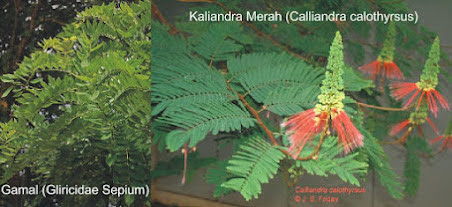
Due to various factors such as geography and labor conditions, a number of countries even have to import animal feed, especially the hay. The United States, for example, exports no less than 700,000 tons of hay annually to Japan, Taiwan and Korea. Leaves of leguminoceae such as indigofera, calliandra and gliricidia are potential sources of ruminant feed for the production of hay. Besides being planted specifically for the production of hay, these legumes can also be used as energy plantation or biomass plantation. The integration of energy plantation or biomass plantation with livestock businesses, especially the production of animal feed in the form of hay product, is a very interesting combination.

In addition to the export market, the domestic or local market is no less interesting. Areas with large areas of land can be used as centers for hay production, which is then distributed to a number of ruminant livestock centers. Hay is dry and compacted (densified) so that it is easy to distribute even over long distances. This is different from silage, which is wet, so it cannot be compacted like the hay. With the fulfillment of feed, the performance of ruminant livestock business can be maintained. In energy plantation or biomass plantation, wood can be processed into energy products such as wood chips, wood pellets, wood briquettes and sawdust charcoal briquettes, or non-energy products such as particle board. That means all parts of the tree can be utilized.

Unlike Honeybees, Why Does the Development of Energy Plantations Get Little Attention from the Goat/Sheep and Cattle Livestock Industry?

Along with the global decarbonization trend, energy plantations are increasingly developing in Indonesia. The creation of these energy pla...