Showing posts with label sheep farming. Show all posts

Sunday, September 15, 2024

Energy Plantations: Not Only Wood Pellet Production But Must Also Support the Livestock Industry

The concept of energy plantation or biomass plantation by utilizing the whole tree seems to be still unpopular at this time. But sooner or later, God willing, it will happen because profit-oriented wood pellet companies will certainly maximize this aspect or profit, of course as long as it does not damage the environment and CSR (Corporate Social Responsibility) will be pursued in other ways. The main orientation currently focusing on wood products for wood pellet raw materials is certainly a good thing, but it would be much better if the benefits of all parts of the tree could be maximized. If this can be done, the benefits will not only be in the energy sector but also in food and feed, important sectors that are essential in human life.

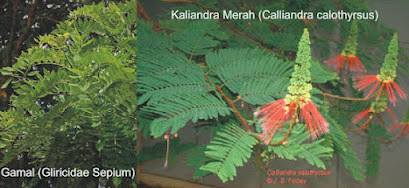
The main composition of energy plantation leaves such as calliandra and gliricidia is protein and this protein element is an important and most expensive component compared to other elements of animal feed. With a large volume of leaves from energy plantations, it should support the livestock industry and not just be thrown away because it is just a by-product or waste that is less useful. In fact, from the livestock industry side, the opposite is true. The utilization of these leaves can be used directly on livestock or processed into animal feed in a processing industry depending on the local situation and conditions.

Large farms can be made from the utilization of energy plantation leaves as well as animal feed factories from the leaves. Leaf pellet production can be done with a production process similar to wood pellet production so that a wood pellet factory adjacent to a leaf pellet factory is also very possible. Like export-oriented wood pellet products, leaf pellets can also be the same. Meanwhile, if a large farm is to be carried out, waste from the livestock farm or animal waste can be used as raw materials / substrates for biogas production. The biogas can then be used for drying in the production of wood pellets or leaf pellets or used for electricity production. The residue from the biogas will become organic fertilizer, either solid organic fertilizer or liquid organic fertilizer. A simple diagram as below.


Thousands of cattle or breeding cattle are imported into Indonesia from Australia and New Zealand and cattle fattening is a promising business in Indonesia because the need for beef has not been met until now. The shortage of beef is met by importing buffalo meat from India and beef from Brazil. Support for the availability of abundant and quality feed is one of the important aspects of self-sufficiency in this meat. In addition to cattle, the need for goats and sheep is also very large. Yogyakarta, a city that is also famous for its goat satay cuisine, needs more than 1500 heads of sheep per day. In addition, the need for aqiqah and Eid al-Adha is also very large. The sheep export market is also very promising, which until now has not been met due to various factors, one of which is the feed factor. Feed in the livestock business plays a very important role or even around 70% of the cost of livestock is the cost of the feed. And livestock is a link in the chain of food needs for humans so that it is inseparable.  

Tuesday, February 7, 2023

Selecting Sheep Species for Animal Husbandry

In general, there are two ideal types of sheep, namely the meat type and the wool type. The type of wool sheep is currently not in demand by breeders in Indonesia. This is probably because meat production is still a top priority and Indonesia's tropical climate is not suitable for wearing wool. Based on these conditions, the selection of meat sheep is more suitable for Indonesian conditions. Moreover, coupled with the demand for meat in Indonesia that has not been met. The demand for lamb meat for aqiqah and satay stalls/restaurants is still largely unfulfilled. In addition, the need for Eid al-Adha which is celebrated by Muslims every year can double. The need for exports is no less large, even reaching millions of head each year, such as during the Hajj season for the dam it is estimated that the need will reach 2 million heads.

Southdown sheep
Sheep of the meat or slaughter type have the following characteristics: dense body shape, wide and deep chest, short neck, and straight back and waist lines. In addition, it also has short legs and the whole body is densely muscled. Some of the sheep that belong to the meat type include Southdown, Hampshire and Oxford. Indonesian native sheep cannot be classified into one of the ideal types of the two types above. Even so, sheep in Indonesia generally tend to the type of slaughter or meat. Several sheep are considered native to Indonesia because they have long been cultivated in Indonesia, namely the thin-tailed sheep, fat-tailed sheep, Garut sheep, Wonosobo sheep (dombos) and Batur sheep.

Dorper sheep
Improvement of genetic quality to increase livestock productivity is also carried out through crossbreeding, for example Suffmer sheep resulting from crossing Merino sheep and Suffolk sheep, then St Croix sheep resulting from crossing West African sheep with local sheep in the Virginia islands in the United States, then Katahdin sheep the result of crossing 3 types of sheep namely St. Croix with Suffolk and Shire sheep. And the popular sheep in Indonesia recently namely Dorper is a cross between the Black Head Persian sheep and the Dorset Horn sheep.

Sheep and goats, although they are quite similar, are actually (species) different. A number of regions in Indonesia have a favorite menu of sheep while other areas have goats. The Special Region of Yogyakarta is an area that has a favorite menu of lamb meat, and you can find lots of stalls or restaurants serving lamb dishes, especially satay. Uniquely in Yogyakarta, even though the name of the stall reads goat satay, the fact is that what is slaughtered or used is lamb. Meanwhile, in areas that are developing Bali cattle breeding, sheep cannot be kept or are prohibited from being raised for fear of Jembrana disease. Areas such as the provinces of South Kalimantan and East Kalimantan are examples of areas where sheep farming is prohibited because it breeds Bali cattle.

Large-scale sheep farming has been carried out in Europe and this should also be done in Indonesia. Integrating sheep farms with energy plantations is a surefire way to create these massive sheep farms. Wood from energy plantations will be a wood pellet product with an export orientation. According to Hawkins Wright's data, from 2020-'21, the demand for wood pellets for the global industry grew by 18.4%, with production only growing 8.4%, especially now with the disappearance of Russia whose volume reached nearly 3 million tons, more details can be read here. While the leaves are used for animal feed, especially sheep farming or it can also be processed into animal feed products such as feed pellets. With the global population predicted to reach 9 billion people in 2050, the need for food, especially protein such as meat, is also increasing as the population increases. Sheep farming and animal feed production are very important as part of fulfilling this food, especially protein, for more details can be read here.

Tuesday, June 14, 2022

Sheep Goat Livestock or Insect Livestock?

According to the United Nations, the global population is predicted to reach 9 billion people by 2050. The food sector is looking for a solution to the protein deficit due to per capita protein demand and population growth. Insects are a source of protein that is promoted in both feed and food. The nine billion people who are predicted to live on planet Earth in 2050, need an additional 250 million tons of protein per year, an increase of 50% compared to today. And according to the FAO, crickets need 6 times less feed than cattle, four times less than sheep, and twice less than pigs and broilers to produce the same amount of protein. A number of insect breeding companies have sprung up, especially in Europe for the production of protein from these insects, and there has even been an organization specifically formed for this, namely IPIFF (International Platform of Insects for Food and Feed). About a third of the production of these insects is for food and two-thirds for protein sources of feed. Will we Muslims be raising insects instead of sheep for protein sources? As Muslims, we shouldn't have to eat crickets to get protein intake as is widely promoted in the west. The types of insects permitted to be bred by the European Commission for this purpose include only 7 species of insects, namely 3 types of crickets, 2 types of caterpillars and 2 types of flies. We choose halal Thaiban, namely mutton and lamb.

Consumption of goat-lamb meat per capita in Indonesia is still very low, which is less than 1 kg per year and this could be only during Eid al-Adha or Eid al-Qurban. Of course this is very concerning, so its consumption needs to be increased. Even though this lamb meat is the best meat and the Prophet Muhammad liked it. Protein is one of the important elements for human food and more specifically lamb and goat meat as a source of protein has its own advantages, for more details read here. In a hadith the Prophet Muhammad SAW also ordered his people to keep these sheep because of blessings. These goats and sheep are closely related to the Muslim worship practices, namely aqiqah and qurban which are part of Islamic law (shariah) until the Day of Judgment, so that raising sheep and goats also has many virtues.

"Take care (use) by you goats because in them are blessings." [HR Ahmad]

"No prophet was sent except that he shepherded the goats. The friends ask, are you too?". He replied, "Yes, I used to herd the goats of the residents of Mecca for a few qirath wages." [HR. Al Bukhari, no. 2262] 

Abu Hurairah r.a. said: "Once served to the Prophet Shallallaahu 'alaihi wasallam a bowl of porridge and meat. So he took part of the arm (of the meat), and that part was most liked by the Prophet Muhammad Shallallaahu 'alaihi wasallam." (HR. Muslim)

Abu Hurairah radhiyallahu 'anhu narrated, "The Prophet Shallallaahu 'alaihi wa sallam was served meat. The leg (of that meat or thigh) was given to Him. The Prophet Shallallaahu 'alaihi wa sallam liked it, so he took a bite of the meat." (HR. Bukhari and Muslim)

With the development of energy plantations or legume plantations, sheep and goat farming can be increasingly encouraged. The main problem in the form of feed availability and more specifically the source of feed protein becomes easy to overcome. Thus, large capacity farms are also very likely to be developed, because the demand for goat and sheep meat is also very large. In addition, Indonesia's palm oil plantation area which reaches 15 million hectares is also potential for livestock, especially sheep, for more details read here. From this it can be concluded that in anticipation of the population growth, Muslims should be serious about raising these goats - sheep.

Saturday, June 5, 2021

Wisdoms From the Work of Every Prophets & Messengers Who Graze the Sheeps

~ Ibn Hajar rahimahullah said, the ulema said, "The wisdom behind grazing sheeps before the time of prophethood is that they are accustomed to arranging goats which will naturally become accustomed to handling human problems." [Fathu Al Bari 1/144]

The prophets worked as sheeps grazer since they were little, so that they became human herders when they were big. As Moses and Muhammad and the other  prophets , at the beginning of their lives they have succeeded in becoming good sheep herders, in order to take lessons after the successful control of livestock towards the success of taking care of Adam's grandchildren in inviting, repairing and preaching them [1]. In order for the Da'i to succeed in preaching, it is necessary to have knowledge of the importance of sustainability and direct practice.

~ In the work of grazing sheeps, there are lessons to get used to the nature of nurturing and protecting. When they were patient in shepherding and gathering after being scattered in the pasture, they learned how to understand the differences in the nature of the people, differences in reasoning abilities. With these differences, those who disobey must be dealt with firmly and the weak must be supported.

This makes it easy for those who have such experience to accept the burden of preaching compared to those who start from directly from the beginning. That was the beginning of learning for the Prophets by facing different characteristics, some were weak, some were lame and intended to climb mountains, some were unable to cross the valley. From there, he learned how to achieve diverse desires as an introduction to getting to know humans with a variety of goals and objectives.[2]

This makes it easy for those who have such experience to accept the burden of da'wah compared to those who start from directly from the beginning. That was the beginning of learning for the Prophets by facing different characteristics, some were weak, some were lame and intended to climb mountains, some were unable to cross the valley. From there, he learned how to achieve diverse desires as an introduction to getting to know humans with a variety of goals and objectives.

 Prophets graze sheep since they were small and they leaned their lives through their efforts, gave a message about the importance of a da'i depending on Allah SWT and did not depend on other people's lives.

If a person relies on someone else, then there will be a bad talk, while da'wah knows no strings attached, and a da'i must distance himself from the giving and alms of others. Humans will not accept the da'wah of people who have one day received alms and mercy, then another day, he advised him and warned him not to fall asleep with the world. Therefore, the provision of the Prophet Sallallaahu ‘Alaihi Wa sallam was never the talk of the Quraysh, the Messenger of Allah lived among them by not asking for their mercy, the things which caused them afterwards could not bring up their services and kindness.

Foot Note:

[1] Assa’di, Al Mawahid Ar Rabbaniyah Minal Ayati Al Qur’aniyah, page.149

[2] Ibnu Hajar, Fathu Al Bari 4/441

Source : Fikih Sirah, Prof.Dr.Zaid bin Abdul Karim az-Zaid, Published by Darussunnah

Friday, June 4, 2021

Satay and Processed Lamb Meat anytime!

Some of our people can enjoy these dishes only during Eid al-Adha. Of course this must continue to be improved because the average meat consumption of the Indonesian population is still low. Even though protein is one of the essential nutrients we really need. And for that lamb meat is the best meat despite many myths that oppose it. In Al Qur'an Surah 6: 143-144, eight pairs of animals (4 pairs) are two (a pair) of sheep, a pair of goats, a pair of camels and a pair of cows. Of the series of livestock mentioned in the verses above, sheep are first mentioned, then goats, camels and cattle.

Eating satay and processed lamb meat products is delicious, so how delicious if you can eat it often.The rules in the Qur'an, the first one has virtue over afterwards. Now, this is where sheep have superiority compared to other livestock mentioned in the verses, although all these animals are halal meat eaten. Other indications of the virtue of sheep can also be found in the Qurban event, namely when Prophet Ibrahim was ordered by Allah SWT to slaughter his son Ismail, then by Allah SWT saved Ismail and replaced him with a large sheep. Then we commemorate this event every year and become the Shari'a of Qurban on the Eid al-Adha feast every year in 10 Dzulhijah. Besides that, all Prophets are sheep shepherd, is another indication that lamb is the best meat and the sheep that are grazed are the best treasures.

The next question that can arise is is there another guide more specific about diet, especially protein? The Qur'an also indicates the source of protein from large livestock occupies the largest portion of poultry and fish. The source of animal protein that is from large livestock is revealed in at least 7 verses or 64%, from fish revealed in 3 verses or 27% and from poultry revealed in 1 verse or 9%. So that the fulfillment of protein needs is the priority of large livestock, especially those that are grazed, because in addition to producing cheap protein, it also fertilizes the land for various human needs. 

So that satay and processed lamb meat can be eaten anytime and anywhere, food innovation is needed. We are certainly familiar with various canned foods so that they can last longer such as gudeg, rendang and so on. Of course this is also very possible for lamb. It is also to further promote the best meat, so that when it is called meat, the community will later associate it to lamb instead of beef or chicken as happened today. If the conditions are like that, then the sheep farming industry will grow rapidly. Sheep farming can be integrated with various large plantations and for more details can be read here.

Friday, May 28, 2021

Integration of Farm with Biomass Plantation or Energy Plantation

The long and expensive social costs for the production of hardwoods such as teak which require a minimum of 15 years make Perhutani company replace them with fast-rotating plants such as gliricidia. As for private companies, the main reason for growing fast-rotation species is mainly profit. Commodities that provide quick returns, with minimal risk. Short harvest time of wood which is only around 2-3 years and can be repetitive (coppice) repeatedly without the need to replanting is the advantage of these plants. Planting and caring for the tree is also very easy. The price of wood that is only worth the waste wood or firewood also mitigates the social cost of securing wood theft. The use of wood as a source of biomass or raw materials in the wood processing industry such as the manufacture of particle boards or as an energy source for example by processing it into wood pellets and wood briquettes. Hundreds of thousands of hectares have been planned for the planting and will take several years to come.

In addition to the main product namely wood, there are actually two products from the tree that can be utilized namely flowers and leaves (whole tree utilization). Flowers for beekeeping or production of honey and leaves for animal feed or meat production. Sheep, goat and cattle farms can be developed close to the plantation so that they are close to feed sources. Although the protein content in gliricidia leaves ranges from 18-24% or high enough for animal feed in general, so it is very good for animal feed, because concentrated feed usually only contains about 15% protein, but to get a balanced feed is still needed a number of other nutrients . Other complementary nutritional needs can be obtained from the surrounding community by collaborating through community empowerment. Nutrients needed for animal feed to become complete feed are complete sources of fiber, sources of protein, vitamins and minerals. Gliricidia leaves with 18-24% protein content as a source of protein, while grass or straw as a source of fiber and added vitamins and minerals.

Grazing
To produce superior livestock products, livestock grazing is the solution. With grazing, livestock will be healthier and feed costs can be cheaper because grass can be directly obtained. With an area of biomass or energy plantations that reaches tens to hundreds of thousands hectares, then allocating several tens or hundred hectares is certainly not difficult. The area can be used for pasture herds. Certain grasses can be planted as a source of food in the pasture. Sheep and cattle can even be farmed and herded in the same pasture field. Rotational grazing is a shepherding technique that can be applied because it is more effective and efficient than conventional grazing.

Single Grazing
 
Mixed Grazing

Feed Factory
With the composition of gliricidia leaves produced from each tree reaching around 30% and an average of 10,000 trees per hectare planted, the number of leaves produced from biomass or energy plantations is huge and excessive for consumption on farms. Then it also has the potential to create animal feed factory. The livestock feed produced can then supply feed to a number of farms in various regions so that the livestock business is growing and self-sufficiency in meat is easily achieved. Meat imports that reach tens or even hundreds of thousands tons should be avoided and sufficient from domestic livestock businesses.

The main problems of livestock are feed and markets. When the feed problem has been resolved it means 50% of the problem has been solved. As for starting a business, the first thing to note is the market or the buyer. If the products produced from the business that we do have no market or buyer, then the business will lose money and go out of business. The potential lack of meat in the country can become a large market potential and export market. Regarding sheep and goats, In Indonesia indeed a number of regions prefer goats such as Jakarta, Central Java and East Java while other regions prefer sheep like Yogyakarta. This should also be a concern regarding the target market.

Unlike Honeybees, Why Does the Development of Energy Plantations Get Little Attention from the Goat/Sheep and Cattle Livestock Industry?

Along with the global decarbonization trend, energy plantations are increasingly developing in Indonesia. The creation of these energy pla...