Showing posts with label feed pellet. Show all posts

Sunday, September 15, 2024

Energy Plantations: Not Only Wood Pellet Production But Must Also Support the Livestock Industry

The concept of energy plantation or biomass plantation by utilizing the whole tree seems to be still unpopular at this time. But sooner or later, God willing, it will happen because profit-oriented wood pellet companies will certainly maximize this aspect or profit, of course as long as it does not damage the environment and CSR (Corporate Social Responsibility) will be pursued in other ways. The main orientation currently focusing on wood products for wood pellet raw materials is certainly a good thing, but it would be much better if the benefits of all parts of the tree could be maximized. If this can be done, the benefits will not only be in the energy sector but also in food and feed, important sectors that are essential in human life.

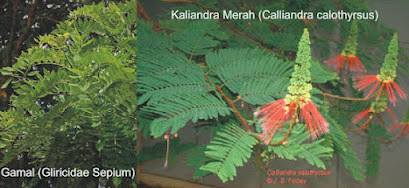
The main composition of energy plantation leaves such as calliandra and gliricidia is protein and this protein element is an important and most expensive component compared to other elements of animal feed. With a large volume of leaves from energy plantations, it should support the livestock industry and not just be thrown away because it is just a by-product or waste that is less useful. In fact, from the livestock industry side, the opposite is true. The utilization of these leaves can be used directly on livestock or processed into animal feed in a processing industry depending on the local situation and conditions.

Large farms can be made from the utilization of energy plantation leaves as well as animal feed factories from the leaves. Leaf pellet production can be done with a production process similar to wood pellet production so that a wood pellet factory adjacent to a leaf pellet factory is also very possible. Like export-oriented wood pellet products, leaf pellets can also be the same. Meanwhile, if a large farm is to be carried out, waste from the livestock farm or animal waste can be used as raw materials / substrates for biogas production. The biogas can then be used for drying in the production of wood pellets or leaf pellets or used for electricity production. The residue from the biogas will become organic fertilizer, either solid organic fertilizer or liquid organic fertilizer. A simple diagram as below.


Thousands of cattle or breeding cattle are imported into Indonesia from Australia and New Zealand and cattle fattening is a promising business in Indonesia because the need for beef has not been met until now. The shortage of beef is met by importing buffalo meat from India and beef from Brazil. Support for the availability of abundant and quality feed is one of the important aspects of self-sufficiency in this meat. In addition to cattle, the need for goats and sheep is also very large. Yogyakarta, a city that is also famous for its goat satay cuisine, needs more than 1500 heads of sheep per day. In addition, the need for aqiqah and Eid al-Adha is also very large. The sheep export market is also very promising, which until now has not been met due to various factors, one of which is the feed factor. Feed in the livestock business plays a very important role or even around 70% of the cost of livestock is the cost of the feed. And livestock is a link in the chain of food needs for humans so that it is inseparable.  

Thursday, March 24, 2022

Dichotomy of Energy Plantation and Legumes Plantation

There is a dichotomy between friends in livestock and forestry today about these legumes. From animal husbandry, they see leaves as a source of feed protein from plants and from forestry, they see wood as a source of wood that is easy to cultivate with high productivity. In the forestry sector, the wood is usually used as a renewable energy source such as wood chips, wood pellets, wood briquettes or charcoal briquettes. Forestry grows thousands of hectares of these legumes such as gliricidia with a wood orientation while the leaves are considered a by-product or waste from their plantation side. By utilizing the wood and leaves, it means getting out of this dichotomy, creating a new paradigm and being able to overcome food and energy problems or optimize the legume plantation or energy plantation (whole tree utilization) of thousands of hectares.

In addition to functioning as a legume plantation for animal feed, especially ruminants (sheep, goats, cattle, buffalo), as well as biomass fuel as above, the same plantation can also be used as a raw material for synthetic fiber board, for more details, please read here . Meanwhile, as the bioeconomic era is getting closer, the need for bioenergy, especially wood pellets, is increasing, the need for animal feed, especially ruminants which is part of the chain of human food needs is also increasing and indeed the growth of the earth's population is also increasing, and the need for biomaterials such as synthetic boards is also increasing. Therefore, the establishment of energy plantations or legume plantations or biomass plantations is very important, strategic and multi-beneficial. Based on these conditions, it is not impossible that in the near future the plantation will become a national and even global trend.

Wednesday, March 16, 2022

Production of Synthetic Boards*, Ruminant Livestock and Animal Feed Industry from Biomass Plantation

Synthetic boards such as laminate, particleboard, fiberboard and cement board can be made from wood produced by biomass plantation. In addition to the small size of the wood, it is also of low quality which currently does not have an adequate utilization value. Forests or biomass plantations can be used as the raw material for the synthetic board. With fast rotation crops with short rotation coppice and fast growing species, such as calliandra and gliricidia, it is very potential as raw material for the synthetic boards. The production of this synthetic boards also uses the same type of raw material as wood pellets, namely wood waste or wood worth as wood waste. Wood produced from this biomass plantation is included in the second group, namely wood worth as wood waste. Even on the other hand, the large wood processing industry that produces a lot of wood waste, not a few who process the waste for the production for wood pellets and synthetic boards.

However, it would be better if the source of raw material for the synthetic boards production comes from forests or biomass plantations so that not only wood is the raw material for the artificial boards but also leaves and flowers. The leaves can then be used as ruminant animal feed and even the production of animal feed as a separate industry. While the flowers from the plantation can be used for honey bee farming. In livestock business, especially ruminants, feed is the highest cost component which is estimated to reach more than 80%. The forest or biomass plantations cover an area of thousands of hectares and are capable of being the main feed source for large ruminant livestock. Even if there is a large surplus, the animal feed industry also needs to be made independent.


Animal feed in the form of hay and pellets is suitable for long distance use because transportation costs will be cheap. Basically all parts of the tree can be utilized so as to provide optimal benefits. To maintain the sustainability of the forest or biomass plantation, good management is also needed so that the productivity performance of the forest or biomass plantation can be maintained. Along with the increasing population, the need for housing and other means of living also increases as well as food. Forests or biomass plantations can help overcome both problems.

*Synthetic boards are laminated board, particle board, fiberboard and cement board. While plywood is not included in it, although plywood is also a type of synthetic board. Plywood production from veneer sheets derived from large diameter wood, is not like this biomass plantation.   

Wednesday, June 30, 2021

Opportunity to Export Animal Feed Protein Sources to Europe

Meat and milk are sources of protein for human obtained from animals, especially ruminants, then meat and eggs from poultry and meat from fish. Availability of sufficient animal protein is needed. Protein deficiency will be bad for health. The livestock industry plays an important role for the adequacy of animal protein today. To produce animal protein in the form of meat and milk, a protein source, namely vegetable protein, is needed in the feed source for the ruminant livestock. Gliricidia and calliandra leaves from energy plantations are a source of protein for the ruminants (sheep, goats and cows). The development of energy plantations should also encourage the livestock industry. This is important for the makers or entrepreneurs of the energy plantation to understand.

Learning from European conditions, according to a study conducted by FEFAC (European Feed Manufacturers' Federation), there is a protein deficit condition in the feed industry sector in Europe and for that they have made a number of efforts to obtain environmentally friendly feed protein sources and sustainable. Deficit is a condition where the consumption or use of protein for the feed has exceeded its production. This means that European production in the form of protein sources for animal feed is still far from its needs so that imports cannot be avoided as a result. Although it is estimated that they will not be able to replace 100% of feed protein sources by one mean alone, which as long as most are imported but reducing this dependence with local production of feed protein would be very helpful. Another motivation is to reduce dependence on protein sources from transgenic materials (GMOs), namely soybean.

Their first effort was the use of PAP (processed animal protein). The use of PAP is indeed high in nutrition, and the source of PAP for the feed is chicken and pork. Although a rule has been made that chicken PAP is not allowed to feed chickens and pork PAP is not allowed to feed pigs plus a tool to detect it, in practice this is difficult to be implemented. This is because feed mills that operate are generally multi-purpose feed so that it can be used for various types of livestock. Very few feed mills make specialty feeds. In fact, if it occurs, for example, PAP chickens for chicken feed and PAP pigs for pig feed, then a disease may occur in the livestock. An example is in the case of mammalian meat and bone meal (MBM). In 1996 with the crisis of Bovine Spongiform Encephalopathy (BSE) because it was related to feeding from MBM for ruminant feed. The BSE-infected meat causes Creutzfeldt-Jakob disease in humans, which poses a high risk to the human food chain. After the epidemic spread, the use of MBM in animal feed was banned. This regulation causes a high dependence on imported raw materials such as soybean meal for the continuity of the supply of meat, milk and eggs.

The second effort is protein production from insect farming. Although it can be done and a number of insect species have also been approved, the fact is that currently there are very few insect farms there, so it will still take a long time to produce sufficient volumes as a source of protein in animal feed. The source of protein from these insects is mainly for fish feed. The third effort from energy plantations is from rapeseed trees. Rapeseed meal is another source of vegetable protein. But the availability of rapeseed meal depends on European biofuel policy. Canola oil is the raw material for biodiesel in Europe. The European biofuel policy is contained in the Renewable Energy Directive 2020-2030 where the contribution of biofuels from plants for the target use in the transportation sector is up to a maximum of 7%.

The fourth effort from the rejected and expired products of the food industry. The rejected and expired products of the food industry it’s mean from the food and food ingredients industries, such as the biscuit industry, instant noodles, chocolate bars, pasta and so on. But what is meant is not food waste from restaurants, or catering. EFFPA, the European Former Foodstuff Processing Association estimates that in the European Union around 3.5 million tons of food waste is processed into animal feed every year. The European Union encourages the use of rejected and expired food, including issuing guidelines to reduce food waste to become feed, because it is not fit for human consumption. They have also discussed protein sources from micro algae or single-celled plants, but they are not a priority at this time due to quality and some limitations. 

The importance of realizing the potential as well as improving the vision for optimizing the energy plantation. GMO problems, for example, the use of gliricidia leaves can be the solution, for more details read here. “Quality protein” is important because not all proteins are equal. Several parameters for protein quality are the amino acid profile and the absence of anti-nutritional substances. For example, soybean meal has high scores for all protein quality parameters including palatability, digestibility and safety. A case that can also be used as a reference, in 2007 there was a withdrawal of pet food because it was contaminated with melamine and cyanuric acid (which is high in nitrogen content and identified as crude protein) in protein elements that cause kidney failure. 

The use of nitrogen from the above chemical is also carried out in agricultural products and has also led to the withdrawal of agricultural products from China in South Africa, the European Union and the United States. Even America ordered the USDA to inspect all agricultural products from China. In 2008 and 2009 China focused on eliminating the problem of counterfeiting or mixing and the effects of the crisis. In 2010 a revised version of the feed and feed additive regulations was published to further ensure quality and safety. Even though China is the largest feed producer in the world, the need for feed raw materials still relies on imports, especially flour/soybean meal to support food needs in the form of meat, milk and eggs for around 1.3 billion people.

From a number of efforts by the European Union to plan for self-sufficiency in feed protein sources, it turns out that the source of protein from rapeseed energy plantataions has become a European priority at this time. Meanwhile, with Indonesia's condition which has a large area of land, there are many energy plantations that can be created, even the Ministry of Environment and Forestry has planned 12.7 million hectares for energy plantations as an effort to support the cofiring program at coal power plants in Indonesia more detail read here. Energy plantation by-products will also be abundant. The production of this leaf can be used as an export commodity to Europe, because the need is large. Animal feed production in Europe is estimated at 160 million tons per year or 16% of the world with 5000 units of feed factories. With the consumption of protein in the feed in the range of 30%, the need will reach 48 million tons. When the domestic feed industry has not been able to absorb it, export is the best choice.

Ruminant is herbivore so that their diet comes from plants, the case of MBM in Europe can be a valuable lesson that feeding from mammals actually creates new problems. Moreover, if the food category is najis, then the livestock will become jalalah which are prohibited (haram) to be consumed. Meanwhile, the case of mixing with hazardous chemicals that occurred in China with melamine and cyanuric acid is only to trick the protein content so that it looks high and is also harmful to the health of the human body. Islam is very concerned about food or food issues, even in the Qur'an Letter of 'Abasa: 24, Allah commands humans to pay attention to their food. The food that enters our stomach must be halal and thoyyib (good). Foods that contain harmful substances that can poison the body are not thoyyib foods. And one of the consequences of haram (prohibited) food is a barrier to prayer being answered.

Sunday, June 6, 2021

Planning Long-Term Feed Supply

Feed is the highest cost component in animal husbandry with a share of about 70%. Thus, feed has an important role for the sustainability of the business. Planning in the provision of good feed will reduce the risk of failure, including a decrease in the production of these farms. Maintaining the high performance of the livestock industry is not an easy thing, of course, including maintaining the quality and quantity of the feed. Feed planning for long-term supply needs to be done carefully and comprehensively so that livestock business can be optimal. Seasonal factor is an important factor in the availability of the feed. The success rate and the amount of profit earned can also be predicted better.

In commercial business, ruminant feed, especially sheep, goats and cattle, is generally easier to obtain than poultry or chicken feed. Imports of soybean meal have been carried out for the poultry or chicken feed. Chicken meat is still ranked 1st as a source of animal protein in Indonesia with a portion of around 70%. Whereas for the ruminants above, generally the feed can be provided by local food sources such as grasses and legume plants. But along with the narrowing of the land that can be used for forage crops, the more limited the availability of feed for livestock, especially for pasture. This condition makes it difficult for ruminant farms to be developed in large capacities or industry-oriented. Energy plantations with an area of up to thousands of hectares are expected to be a solution for this.

The development of energy plantations itself is closely related to the use of renewable energy, especially biomass, both locally / domestically and globally. In line with the bioeconomy era, the use of fossil fuels as well as for the manufacture of various other products is reduced, so biomass will receive more attention and will be increasingly used. This should be in line with the growth of the ruminant livestock sector and the halal industry in general. Related to animal feed, there are 3 important things that need to be considered, namely nutrition, safety and sustainability. Apart from these factors, technological, logistics and good management factors also play an important role in the long-term sustainability of the feed supply. If all the elements of feed (fiber, protein, vitamins, minerals, etc.) can be fulfilled from local / domestic sources so that the price is cheaper, the livestock business will be more competitive. Meanwhile, if it depends on imports, the cost of feed will be expensive and the livestock business will be less competitive so that the output of meat and milk products as a source of protein will also be expensive. And don't let the domestic animal feed production grow, say 5 times but imports of raw materials 15 times. 

Friday, June 4, 2021

Production of Box Shaped Hay From Gliricidia Leaves

Apart from market, feed is another important factor in livestock business. Striving for and ensuring the availability of feed throughout the year both in quality and quantity is a challenge in itself, especially industrial-oriented ruminant farms. The productivity of livestock products is largely determined by these feed factors. The important role for livestock is for the growth of young livestock and for maintaining life and producing products (milk, calves/lamb, meat) and power for adult livestock. Another function of feed is to maintain endurance and health. In order for livestock to grow as expected, the type of feed given to livestock must be of good quality and in sufficient quantities.

In addition, livestock productivity itself is influenced a lot by environmental factors, namely up to 70%, while about 30% is genetic factors. And among these environmental factors, the aspect of feed has the greatest influence, which is around 60%, for example superior sheep farming such as the dorper type but if the quality and quantity of feed is not met then the results are also not optimal. Meanwhile, in terms of livestock business, the cost of feed is also the largest production cost, namely 60-80% of the total production cost. So it is very natural that attention or focus on feed issues is very important.

Seeing the above conditions, processing technology for animal feed is important. The purposes of animal feed processing include preserving nutrition and extending shelf life. Drying the leaves of gliricidia or calliandra to a moisture content of about 15% is one such effort or commonly called hay. By making hay the two objectives of processing animal feed above, namely maintaining nutrition and extending the shelf life can be achieved, but with a large volume of dry feed or hay (bulky) it will be inefficient in using space for storage or if it is to be used in other places where need quite far transportation. This is why it is necessary to apply biomass densification technology to solve this problem. Hay compaction into blocks or box shaped is a practical and easy undertaking. The equipment and compaction process into box shaped is also easy and cheap, compared to other biomass compaction technologies such as pellets or briquettes.

A sheep or cow farm should be built near the energy plantation so that they can easily get a source of feed for the gliricidia leaves. The leaves are then made hay and compacted into the blocks / box shaped. And because gliricidia leaves are a source of protein, so to be a complete feed, another source of feed is needed. This can be fulfilled by the surrounding community with community empowerment patterns or for more details, please read here. Sources of feed from the community, for example a source of fiber from grasses or agricultural waste, can also be made hay, so that the farm is available as a complete feed (complete feed) which is safe for the operation of the farm business. And because the estimated leaf production from energy plantations is very abundant, some of the hay that is produced can also be sold elsewhere. 

Technology is basically a tool to achieve a goal. From a technological point of view, namely biomass densification, besides the raw material for glicidia leaves can be made hay, the leaves can also be made into pellets or briquettes. The main difference between pellets and briquettes is only a matter of size, briquettes are bigger than pellets. The form of puck briquettes like the photo above is the best form for animal feed applications. From a technical perspective, pellets and briquettes are also denser or have a higher density than hay. The dust problem in hay can also be reduced by making these pellets or briquettes. But it is true that making pellets or briquettes requires higher investment costs and the production process is more complex.

Production of Gliricidia Leaf Pellets as a Non-GMO and Sustainable Animal Feed Solution

Food is a top priority compared to feed and energy. This has a consequence of adequate food for humans before animal feed and energy. When food and energy are prioritized over food, there will be various social unrest. The tortilla riots in Mexico some time ago are an example of how energy is prioritized over food, namely corn is prioritized for bioethanol. Likewise, if feed is prioritized so that food supplies will be disrupted. Soybeans, for example, are a source of food but also a source of feed. The largest soybean production from the United States and Brazil. In a number of countries soybeans are a source of food and feed because the oil is extracted into soybean oil and the meal becomes animal feed, but in Indonesia, soybeans are mainly used for food. Vegetable oil in Indonesia is mainly from palm oil and coconut oil. Even in its history, Indonesian coconut oil was destroyed by the American Soybean Association (ASA) with the negative issue that propagated coconut oil as bad oil on the international vegetable oil market, so that until now coconut oil has not revived.

Indonesian animal feed production also mostly relies on protein sources from soybean and palm oil meal. In fact, because of the great need, it also imports soybean meal (SBM). The more developed the livestock industry, the greater the need for feed. Feed in the livestock industry is one of the key components to its success. Adequacy of feed with good nutrition, safe and affordable is very important for livestock business. As the largest palm oil producer in the world, which ranges from 40 million tonnes / year, the production of palm kernel cake is estimated at more than 6.5 million tonnes / year, if all of these palm kernel cakes are optimized for the domestic feed industry, it would be very good. Likewise coconut cake.

Gliricidia leaves are also a source of protein for animal feed, especially ruminants and fisheries. With a protein content of about 20%, gliricidia leaves are very potential as a source of this protein. Moreover, the programs of the feed industry associations are reducing or even eliminating dependence on transgenic raw materials (GMO) such as soybeans and environmental factors in the form of sustainability. With the program of making energy plantationsor biomass plantations which are also increasingly massive for various industries based on renewable and sustainable materials, the production of leaves as a side waste is also increasing. The potential for leaf waste, which is estimated to reach hundreds of thousands of tons, even millions of tons, will be very potential for animal feed, especially reducing feed derived from GMO materials. Environmentally productive efforts like this to meet human needs will further encourage bioeconomics. Halal meat is a very important source of protein for human food, so animal feed production is an integral part of the chain.

The growth rate of the feed industry also varies from country to country. This depends on a number of factors such as a country's food policy, people's purchasing power, availability of raw materials and so on. For example: for countries in Europe, about 20 years ago the average capacity of feed mills in Italy was 11,000 tons / year, while the animal feed industry in the Netherlands has an average capacity of 45,000 tons / year or more than 4 times the feed industry in Italy and has also exceeded the European average capacity today. Currently, the average feed mill in Italy has an average capacity of 29,000 tonnes / year (still about 3 times that of 20 years ago), but at the same time feed mills in the Netherlands already have an average capacity of 140,000 tonnes / year. The majority of animal feed production in the Netherlands is for pig feed, so it would not be suitable for conditions in Indonesia. With majority of Islam in Indonesia, the production of animal feed developed as a top priority is for the halal industry. Based on the potential for raw materials, the potential for land for animal feed production and so on, Indonesia should accelerate its halal industry, one of which is by boosting its animal feed industry. The Netherlands, with its small population and limited land area, is even very strong in developing its research to support the feed industry. We also don't want to lose.

Gliricidia Leaf Feed Pellets Factory to Optimize Biomass / Energy Plantations and Increase National Meat Production

The availability of feed is very important to support and sustain the livestock business. Easy, abundant and cheap feed is important to be pursued. Feed is also the highest cost component in livestock farming, as is fertilizer for a number of plantations and farms. The effort to get a continuous supply of quality feed is an absolute prerequisite for the success of a livestock business. The supply of domestic meat, which is still mostly imported, is certainly not encouraging. For this reason, the national meat production program to self-sufficiency in meat must be encouraged. The scarcity of meat availability, which has driven higher prices, makes it easy for cheap haram meat to enter the market, especially since there is weak supervision and light sanctions for suppliers of this haram meat. As a country with the largest Muslim majority and meat is an important food element in the form of protein, the development of animal husbandry must also be in sync with these conditions. Farms that are made and become the main priority are livestock that support the halal industry. 

Gliricidia leaves, which are waste from energy  or biomass plantations, are a potential source of high nutritious food. The increasing projection of energy or biomass plantation development should also be in line with the utilization of the leaf waste for animal feed. The content of gliricidia leaves which are rich in protein is an important source of nutrition for livestock, especially ruminants such as sheep, goats and cows, so that it needs to be developed and utilized optimally. By utilizing these leaves, all parts of the tree from the energy or biomass plantations can be optimized. Making pellets from these leaves (feed pellets) will also facilitate storage, save transportation, last longer and make it easier to use as animal feed.

Muslims who carry out the Qurban worship every year will need a large supply of livestock in the form of sheep, goats and cows. In addition, during Ramadan and Eid al-Fitr, there is also a surge in demand for this meat, and it is often found that haram meat such as pork and dog is mixed with the meat above. And when a child is born, a Muslim family is also required to do aqiqah by slaughtering 1 or 2 sheep or goats. Apart from that, basically the supply of meat for daily needs is still minus. These things should be the motivation for the development of a livestock business.

Tuesday, June 1, 2021

World Animal Feed Production Approximately 1 billion tonnes / year and Potential Gliricidia Leaf Feed Pellets

World animal feed production is currently estimated at 1 billion tonnes per year. As a chain to fulfill human food needs, especially meat, animal feed production is very important and strategic. The major countries for producing world animal feed, namely China with a share of 19.6%, followed by a number of countries, namely America with 17.4%, Brazil 6.8%, then countries such as Mexico, Spain, India, Russia, Japan and Germany as well. are major producers of animal feed. the rest by countries around the world. Or with a combination of China, the United States, Europe and Brazil, accounting for more than 60% of world animal feed production with almost half of the feed production being poultry feed. It is estimated that there are more than 8,550 feed factories in China with a production of 179 million tons, 6,012 feed factories in America with a production of 173 million tons, 1,556 feed factories in Brazil with a production of 68 million tons. With an estimated human population in 2050 reaching 9.6 billion, it is estimated that the need for feed will be huge.

Meat is an important source of protein for humans. But for Muslims consuming meat does not only depend on the protein content of the meat, but the type of livestock, slaughtering, and processing it until it is ready for consumption must comply with Islamic law. The prohibited livestock animals cannot be farmed or even consumed because the law is haram (prohibited) for Muslims. Based on a country's animal feed production, it can also be seen what kind of livestock and meat they consume. For example, the Netherlands with about 75 feed factories, the production of animal feed reaches 12.2 million tons per year, the distribution of 5 million tons of pig feed, 3.7 million tons of beef and dairy cattle, 3.1 million tons of poultry and 0.4 million tons other livestock. Meanwhile, Turkey recorded animal feed production of 10.5 million tons with a composition of 4.2 million tons of feed for dairy and beef cattle, 4.6 million tons of poultry, and 1.5 million tons of other livestock. While globally the composition is as follows: poultry feed production is ranked first with a portion of 45%, followed by pig feed at 11%, three ruminants 10% and the rest, such as fish, domesticated and horse feed. Indonesia with a majority Muslim population should also prioritize developing a halal-based animal feed industry so that it is in line with Islamic law. Halal issues are an important and fundamental problem for Muslims in matters of food.

Sources of feed, especially its availability, are vital for animal feed production. A number of countries even have to import various raw materials for animal feed. Even in Europe and America leftovers are also used as a source of raw material for animal feed, which is estimated at 60% in Europe and 50% in the United States. Although world animal feed production reaches around 1 billion tonnes every year, basically the world's major feed producers who dominate production are not much. Currently, it is estimated that there are around 31 thousand feed factories worldwide, with a distribution of one thousand in Africa, 13 thousand in Asia, 5 thousand in Europe, 3 thousand in Latin America, 6 thousand in North America and 288 in the Middle East. Charoen Pokphand (CP), a company based in Thailand, is among the top 10 global feed mills with a production of around 27 million tonnes / year. Furthermore, the China-based company New Hope with a production of 20 million tons / year, then the American company Cargill ranks third with 19.2 million tons, followed by another American company, namely Purina Animal Nutrition with 12 million tons. Other large companies, BRF (Brazil) 11 million tons / year, Tyson Foods (USA) 10.3 million tons / year, COFCO (China) 8.3 million tons / year, Ja Zen-Noh (Japan) 7, 5 million tons / year, Shaungbaotai Group (China) 6.6 million tons / year, and Wen's Food group (China) 6.5 million tons / year.

The era of bioeconomy, which is getting closer and closer, is increasingly encouraging the use of renewable materials for various human activities such as energy, packaging, clothing and so on. The demand for sustainability is an obligation for various industries in this era, including the animal feed industry. A number of locations in Indonesia have created and launched energy plantations to welcome and be in line with the bioeconomy era. Energy or biomass plantations with the main focus on wood utilization, but have not yet utilized the potential of leaves as a by-product of these plantations. Gliricidia is a plant species that is widely used because it is a fast growing and short rotation coppice crop so that in addition to the fast harvest time there is also no need to replant until a certain time. Gliricidia leaves have high nutrition, no less protein content than palm oil cake, soy bean meal and so on, so they have the potential for animal feed production, especially feed pellets. A number of studies mention the use of gliricidia leaves as animal feed for ruminants or fish, but it is not suitable for the type of poultry.

The availability of safe, quality and affordable feed will encourage intensive livestock business. Currently, we still encounter a number of livestock that are fed in the form of municipal waste in landfills, which of course the resulting meat is not suitable for human consumption. The feed factory also indirectly encourages the improvement of food quality from meat and milk produced from livestock business. Tens of thousands and even hundreds of thousands of hectares of gliricidia plantations will produce abundant leaf waste that can be used as raw material for these feed pellets. Typical feed mill capacity is also proportional to the capacity of the farm or its consumers and also the availability of raw materials, for example in Turkey about 60% of feed mills with a capacity of less than 10 tons / hour, about 25% capacity 11-20 tons / hour and the rest with more capacity. of 20 tons / hour. In the end, it is hoped that with the advancement of livestock, it will be easier and more affordable to get halal meat, improve the quality of food and can be reduced and even eliminated the circulation of haram meat on the market.

Friday, May 28, 2021

Integration of Farm with Biomass Plantation or Energy Plantation

The long and expensive social costs for the production of hardwoods such as teak which require a minimum of 15 years make Perhutani company replace them with fast-rotating plants such as gliricidia. As for private companies, the main reason for growing fast-rotation species is mainly profit. Commodities that provide quick returns, with minimal risk. Short harvest time of wood which is only around 2-3 years and can be repetitive (coppice) repeatedly without the need to replanting is the advantage of these plants. Planting and caring for the tree is also very easy. The price of wood that is only worth the waste wood or firewood also mitigates the social cost of securing wood theft. The use of wood as a source of biomass or raw materials in the wood processing industry such as the manufacture of particle boards or as an energy source for example by processing it into wood pellets and wood briquettes. Hundreds of thousands of hectares have been planned for the planting and will take several years to come.

In addition to the main product namely wood, there are actually two products from the tree that can be utilized namely flowers and leaves (whole tree utilization). Flowers for beekeeping or production of honey and leaves for animal feed or meat production. Sheep, goat and cattle farms can be developed close to the plantation so that they are close to feed sources. Although the protein content in gliricidia leaves ranges from 18-24% or high enough for animal feed in general, so it is very good for animal feed, because concentrated feed usually only contains about 15% protein, but to get a balanced feed is still needed a number of other nutrients . Other complementary nutritional needs can be obtained from the surrounding community by collaborating through community empowerment. Nutrients needed for animal feed to become complete feed are complete sources of fiber, sources of protein, vitamins and minerals. Gliricidia leaves with 18-24% protein content as a source of protein, while grass or straw as a source of fiber and added vitamins and minerals.

Grazing
To produce superior livestock products, livestock grazing is the solution. With grazing, livestock will be healthier and feed costs can be cheaper because grass can be directly obtained. With an area of biomass or energy plantations that reaches tens to hundreds of thousands hectares, then allocating several tens or hundred hectares is certainly not difficult. The area can be used for pasture herds. Certain grasses can be planted as a source of food in the pasture. Sheep and cattle can even be farmed and herded in the same pasture field. Rotational grazing is a shepherding technique that can be applied because it is more effective and efficient than conventional grazing.

Single Grazing
 
Mixed Grazing

Feed Factory
With the composition of gliricidia leaves produced from each tree reaching around 30% and an average of 10,000 trees per hectare planted, the number of leaves produced from biomass or energy plantations is huge and excessive for consumption on farms. Then it also has the potential to create animal feed factory. The livestock feed produced can then supply feed to a number of farms in various regions so that the livestock business is growing and self-sufficiency in meat is easily achieved. Meat imports that reach tens or even hundreds of thousands tons should be avoided and sufficient from domestic livestock businesses.

The main problems of livestock are feed and markets. When the feed problem has been resolved it means 50% of the problem has been solved. As for starting a business, the first thing to note is the market or the buyer. If the products produced from the business that we do have no market or buyer, then the business will lose money and go out of business. The potential lack of meat in the country can become a large market potential and export market. Regarding sheep and goats, In Indonesia indeed a number of regions prefer goats such as Jakarta, Central Java and East Java while other regions prefer sheep like Yogyakarta. This should also be a concern regarding the target market.

Unlike Honeybees, Why Does the Development of Energy Plantations Get Little Attention from the Goat/Sheep and Cattle Livestock Industry?

Along with the global decarbonization trend, energy plantations are increasingly developing in Indonesia. The creation of these energy pla...