Thursday, March 24, 2022

Dichotomy of Energy Plantation and Legumes Plantation

There is a dichotomy between friends in livestock and forestry today about these legumes. From animal husbandry, they see leaves as a source of feed protein from plants and from forestry, they see wood as a source of wood that is easy to cultivate with high productivity. In the forestry sector, the wood is usually used as a renewable energy source such as wood chips, wood pellets, wood briquettes or charcoal briquettes. Forestry grows thousands of hectares of these legumes such as gliricidia with a wood orientation while the leaves are considered a by-product or waste from their plantation side. By utilizing the wood and leaves, it means getting out of this dichotomy, creating a new paradigm and being able to overcome food and energy problems or optimize the legume plantation or energy plantation (whole tree utilization) of thousands of hectares.

In addition to functioning as a legume plantation for animal feed, especially ruminants (sheep, goats, cattle, buffalo), as well as biomass fuel as above, the same plantation can also be used as a raw material for synthetic fiber board, for more details, please read here . Meanwhile, as the bioeconomic era is getting closer, the need for bioenergy, especially wood pellets, is increasing, the need for animal feed, especially ruminants which is part of the chain of human food needs is also increasing and indeed the growth of the earth's population is also increasing, and the need for biomaterials such as synthetic boards is also increasing. Therefore, the establishment of energy plantations or legume plantations or biomass plantations is very important, strategic and multi-beneficial. Based on these conditions, it is not impossible that in the near future the plantation will become a national and even global trend.

Wednesday, March 23, 2022

Sheep Breeding with Rotation Grazing

Efforts to achieve self-sufficiency in meat, especially for Muslims to strengthen their aqidah (faith) by means of qurban and aqiqah, are still facing many obstacles. The main obstacle is the number of seed sheep which are difficult to obtain because of the large number of productive females that are slaughtered for both aqiqah and daily consumption. Muslims are important and obligated by law (fardhu kifayah) or as a collective obligation to raise sheep to achieve the above objectives. Do not let Muslims can not perform these prayers because there are no livestock, especially sheep. Of course, it is also not good if because they are reluctant to raise sheep, Muslims will have to buy sheep from non-Muslims, even though the number in Indonesia is the majority and is also the largest in the world.

There are at least two things to overcome the problem of the sustainability of the supply of sheep, namely, firstly with a set of regulations to provide strict sanctions and provide a deterrent effect for anyone who is proven to slaughter productive females, and secondly, by increasing the production of seed sheep or lamb breeds as much as possible so that they can keep pace with the rate of productive ewes that are slaughtered. In the first point, although there is  a regulation, in fact it is difficult to implement because the government is not firm and the light sanctions. While in the second point, anyone can do it, so it seems that the second point is easier to do.

The location of sheep farming can be done anywhere, whether in villages, mountain slopes, forest edges and even in urban areas. These livestock models adapt to the characteristics of the location, especially regarding the source of feed. For example, in urban areas with limited land, the sheepfolds must even be leveled, with feed sources especially from food industry wastes. In the food industry, the main product are for human food and by-products or waste for animal feed, such as tempe and tofu factories, noodle factories, biscuit factories and so on. Meanwhile, in rural areas with large areas of land, grazing is also very possible. Grazing will save on feed costs and is very suitable for seed sheep production or breeding. While rotation grazing is a better grazing technique so that the efficiency and performance of the farm is better. Even on land that is close to an energy plantation, apart from grazing with abundant sources of feed, a feed factory can also be built in that location. And basically the more models with various variations, the more regions in Indonesia that can be worked on for self-sufficiency in meat especially halal meat.

In rotation grazing, the grazing area will be divided into paddocks. And basically the more paddocks, the better because pasture can be utilized as a source of animal feed to the fullest. In general to start with 5 to 10 paddock with each paddock for grazing 3 to 7 days then rested 25-30 days. Of almost all rotation grazing practices, 4 paddock is the minimum number to start with. The square shape is the best shape for the paddock, so try to get as close to it as possible. The shape of the small elongated and circular paddock is not good because it is more difficult to achieve an even utilization of grass by livestock.


By increasing its production centers, the problems of seed sheep will be overcome. Of course this takes time and continuous effort. The unused, marginal and critical lands which amount to millions of hectares can be converted into the livestock area. Divine motivation to strengthen aqidah and part in enforcing Islamic law will continue to motivate Muslims to raise sheep farming, in addition to meeting their daily protein needs in the form of meat. The people's culinary shift from protein consumption of chicken meat to duck meat and currently more and more lamb is consumed. The halal industry should also be growing with Muslim business actors themselves.

Wednesday, March 16, 2022

Production of Synthetic Boards*, Ruminant Livestock and Animal Feed Industry from Biomass Plantation

Synthetic boards such as laminate, particleboard, fiberboard and cement board can be made from wood produced by biomass plantation. In addition to the small size of the wood, it is also of low quality which currently does not have an adequate utilization value. Forests or biomass plantations can be used as the raw material for the synthetic board. With fast rotation crops with short rotation coppice and fast growing species, such as calliandra and gliricidia, it is very potential as raw material for the synthetic boards. The production of this synthetic boards also uses the same type of raw material as wood pellets, namely wood waste or wood worth as wood waste. Wood produced from this biomass plantation is included in the second group, namely wood worth as wood waste. Even on the other hand, the large wood processing industry that produces a lot of wood waste, not a few who process the waste for the production for wood pellets and synthetic boards.

However, it would be better if the source of raw material for the synthetic boards production comes from forests or biomass plantations so that not only wood is the raw material for the artificial boards but also leaves and flowers. The leaves can then be used as ruminant animal feed and even the production of animal feed as a separate industry. While the flowers from the plantation can be used for honey bee farming. In livestock business, especially ruminants, feed is the highest cost component which is estimated to reach more than 80%. The forest or biomass plantations cover an area of thousands of hectares and are capable of being the main feed source for large ruminant livestock. Even if there is a large surplus, the animal feed industry also needs to be made independent.


Animal feed in the form of hay and pellets is suitable for long distance use because transportation costs will be cheap. Basically all parts of the tree can be utilized so as to provide optimal benefits. To maintain the sustainability of the forest or biomass plantation, good management is also needed so that the productivity performance of the forest or biomass plantation can be maintained. Along with the increasing population, the need for housing and other means of living also increases as well as food. Forests or biomass plantations can help overcome both problems.

*Synthetic boards are laminated board, particle board, fiberboard and cement board. While plywood is not included in it, although plywood is also a type of synthetic board. Plywood production from veneer sheets derived from large diameter wood, is not like this biomass plantation.   

Thursday, November 25, 2021

Hay Production Urgency


In countries with four seasons, in winter, plants grow very slowly and even stop growing, so hay is used as a feed supplement, while in Indonesia in the dry season, grass is also limited forage, so to maintain livestock performance, additional feed such as hay should be used. By making hay, animal feed becomes durable so that it can be used as a source of feed when supply is reduced. Dry and compacted conditions make hay easy to store and use. In breeding-oriented farms, the quality of feed is usually not as good as in fattening-oriented farms. Breeding duration is longer than fattening is one of these considerations, because feed is the highest cost component in livestock business.
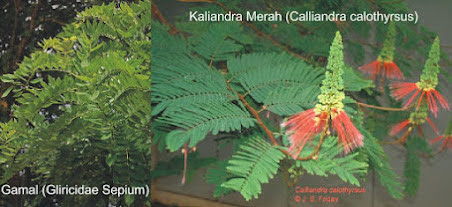
Due to various factors such as geography and labor conditions, a number of countries even have to import animal feed, especially the hay. The United States, for example, exports no less than 700,000 tons of hay annually to Japan, Taiwan and Korea. Leaves of leguminoceae such as indigofera, calliandra and gliricidia are potential sources of ruminant feed for the production of hay. Besides being planted specifically for the production of hay, these legumes can also be used as energy plantation or biomass plantation. The integration of energy plantation or biomass plantation with livestock businesses, especially the production of animal feed in the form of hay product, is a very interesting combination.

In addition to the export market, the domestic or local market is no less interesting. Areas with large areas of land can be used as centers for hay production, which is then distributed to a number of ruminant livestock centers. Hay is dry and compacted (densified) so that it is easy to distribute even over long distances. This is different from silage, which is wet, so it cannot be compacted like the hay. With the fulfillment of feed, the performance of ruminant livestock business can be maintained. In energy plantation or biomass plantation, wood can be processed into energy products such as wood chips, wood pellets, wood briquettes and sawdust charcoal briquettes, or non-energy products such as particle board. That means all parts of the tree can be utilized.

Saturday, September 11, 2021

Utilization of Marginal Land and Former Coal Mines for Ruminant Livestock and Charcoal Briquette Production

Photo is taken from here
The extent of marginal land including critical land and unused land which reaches more than 6 million hectares as well as ex-coal mining land which is estimated to reach 8 million hectares are environmental problems that must be overcome. Turning these lands back into productive land so that apart from preventing a bigger environmental disaster, it also provides other benefits for human life. One solution to this problem is to plant the land with pioneer plants of the leguminoceae group whose roots firmly grip the soil and are in symbiosis with azetobacter so that it fertilizes the soil such as calliandra and gliricidia as well as its leaves as a source of animal feed, flowers for honey production, and the wood for the production of charcoal briquettes. Or in other words, the establishment of the plantation besides having environmental benefits as an effort for conservation and land reclamation along with water conservation, of course, also provides benefits for ruminant livestock or the production of animal feed and the production of charcoal briquettes. Ruminant farms, namely sheep, goats and cattle, are very suitable to be developed using the leaves of the plantation. The combination with charcoal briquettes, namely by using the wood, is an ideal combination or integration. In a number of countries the charcoal briquettes are used as fuel for grilling BBQ from lamb, goat and beef. So in addition to all parts of the tree can be utilized also even the final product of livestock in the form of meat and wood processing so that it becomes charcoal briquettes also meet again. An interesting and unique blend or integration.

The need for red meat, namely lamb, goat and beef in the country itself is still lacking, so it requires an adequate supply. In terms of goat and lamb meat, the need for the Jabodetabek (Jakarta, Bogor, Depok, Tangerang and Bekasi) area alone has not been met, so it is supplied alternately from East Java, Central Java and Lampung alternately. In addition, according to Aspaqin (Association of Indonesian Aqiqah Entrepreneurs) there has been an imbalance in the supply of sheep and goats due to the large number of female productive sheep and goats being slaughtered. This condition causes the sustainability of the supply of sheep and goats to be disrupted. According to data from Aspaqin that they collected, 63% of female sheep and goats were slaughtered from a total of 331,693 slaughtered tails. Of course there are still many who are not recorded because there are still many aqiqah entrepreneurs who are not members of the Aspaqin. In addition, there are also many stalls for eating goat dishes, such as satay stalls which still slaughter productive sheep and female goats. Aspaqin continues to strive for education and socialization to improve these conditions, including a proposal to provide punishment for the slaughter of these productive females.

Meanwhile, in the beef cattle sector, Indonesia has the advantage of fattening cattle (feedlot). With the availability of a lot of agricultural wastes and agro-industrial wastes in Indonesia, this business is very competitive, even indonesia is the best. Moreover, this is by creating a plantation that is specifically designed for the feed source by utilizing land that can be said to be unproductive at first. By only taking about 100-120 days, the fattening was successful or completed, although in general, breeder or seed cattle are generally still imported from Australia. Australia, especially northern Australia is the center of the seed cattle. With the vast grazing area there, the cost of producing feeder cattle is very competitive and cannot be done well in Indonesia. Although there are a number of discourses to produce seed cattle in eastern Indonesia and palm oil plantations, the facts are still not or are still very minimal. In addition, according to Gapuspindo (Indonesian Beef Cattle Farmers Association), the domestic demand for beef has not been met or there is still a shortage of around 60% and this shortage is filled by imports of buffalo meat from India. Buffalo meat from India actually has to be sold cheaper than beef, but in fact it is the same as beef. This condition is getting worse, especially in the period leading up to the Eid al-Fitr holiday with lots of illegal meat circulating, such as wild boar meat.

Charcoal briquettes are a product of wood processing from the plantation. The production of charcoal briquettes using wood raw materials must also be managed properly so that it can be sustainable. The important thing to note is that the harvest of wood for the production of charcoal briquettes should not exceed the production of wood from the plantation itself, for example the need for wood for the production of briquettes is 1000 tons / month, the speed of wood production from the plantation is at least the same as the wood harvested every month. Charcoal briquette production techniques are also available in 2 options or routes such as the scheme below. However, route 1, which is briquetting before carbonization, is more in demand because the quality of the briquettes produced is better. In this route, the wood biomass raw material has been downsized so that the particle size is suitable for the production of the briquettes and the dryness level has also been adjusted and then briquetted or pressed in a briquette machine without using additional adhesive. The briquette product is then carbonized so that it becomes the final product in the form of charcoal briquettes or commonly known as sawdust charcoal briquette.

Photo is taken from here
In addition to domestic consumption, sheep and goats are also export commodities to a number of countries. Information obtained from the Ministry of Agriculture's Pusdatin (Centre of datas and informations) that Indonesian sheep and goats have been exported, among others, to Malaysia and the United Arab Emirates (UAE). Basically, the choice to do sheep and goat export business is the choice of the breeders or farmers  themself and the specifications for the export market are also different for local needs. If the local market generally uses sheep and goats weighing 25-35 kg per head, the export market generally requires a weight above 35 kg per head. For example, for a large market for sheep and goats, Saudi Arabia, especially during the hajj season, reaches around 2 million heads or a quarter of the country's needs, which means it reaches 8 million heads per year.

And lastly, basically the need for food, especially animal protein and more specifically from ruminants sheep, goats and cattle will continue to increase along with the increase in the population itself. The world population is estimated to reach 10 billion in 2050 or 1.3 times today and Indonesia's population will reach 319 million in 2045 or 1.2 times from today. Another thing that deserves attention is Indonesia's demographic bonus. The demographic bonus with the dominance of the productive young generation should be a separate strength for the Indonesian nation if it is supported and directed properly. This sector is certainly one solution. With the vast land area in Indonesia that can be used for this business, God willing, it will overcome various important problems today such as food security, preventing environmental damage, creating jobs, improving living standards, improving food quality and so on.

Saturday, July 31, 2021

Sheep and Goat Farming Based on Energy Plantation

The need for food, especially animal protein, continues to increase along with population growth. Meat, especially from sheep and goats, is a source of animal protein that is a favorite of many people. It is estimated that the world's population will reach 10 billion in 2050 and especially Indonesia's population of 319 million in 2045. Greater Jakarta or Jabodetabek is the most densely populated area in Indonesia so that the need for food, especially animal protein, lamb and goat meat is getting bigger. Currently these areas bring in the needs of lamb and goat meat from Central Java, East Java and Lampung alternately depending on the availability of supplies for each area. This is because no single region is able to meet the needs of Jabodetabek alone. Or if these areas can always supply the needs of Jabodetabek on a regular basis then the business can continue to be sustainable and stable but of course it can overcome the obstacles in the sheep and goat business.

It turns out that a number of problems surround the sheep and goat business including the availability of seeds, breeding skills, availability of feed, marketing chain and so on. Simple things such as the availability of seeds. Although breeders in general have not used superior seeds, the availability of seeds is also a problem because many productive females are slaughtered. This is mainly due to the business competition factor, because the price of males is more expensive which makes female goats slaughtered even though this disrupts the sustainability of the livestock business. Aspaqin (Indonesian Aqiqah Entrepreneurs Association) noted that 63% of the female members were slaughtered from a total of 331,693 slaughtered tails. Of course there are still many who are not recorded because there are still many aqiqah entrepreneurs who are not members of the Aspaqin. In addition, there are also many restaurants for eating lamb dishes, such as satay that still slaughter productive female goats.

Of course it would also be better if the sheep and goat that became the seed was the preferred or superior sheep and goat so that the quantity and quality of meat was better. The feed-to-meat conversion factor in superior sheep and goat is also higher, making it more profitable. And this is mainly the responsibility of research institutions. Dorper sheep and Bohr goats are the superior types of sheep and goat. However, there is an easier way to maintain the sustainability of the sheep farm, namely by reducing or even prohibiting the slaughter of productive female sheep and goat. In this way, the continuity of sheep and goat seeds can be maintained and even more developed. To be able to realize this, of course, requires efforts from all parties. Providing incentives or sanctions can be done to support this.

The problem of skill of the breeder is also another obstacle. Most of the sheep and goat breeders are small farmers with traditional farming techniques. This makes it difficult when used to meet routine requests, especially large quantities. Modern farming patterns must be carried out to become a reliable livestock industry as the foundation of the livelihood of these farmers. Only with this effective pattern and efficient farming can be implemented. With good preparation supported by these skills, sheep and goats livestock industry players are able to carry out sheep and goat  farming intensively so that they are expected to be able to supply the meat needs.

Sheep and goats farming is not only an effort to fulfill food sources, especially animal protein in the form of meat and milk, it is also a part of perfecting Islamic law. The population that continues to increase means that Muslim babies born to their parents are ordered to perform aqiqah. In addition, the celebration of Eid al-Adha which is held every year also requires sheep and goats as a sacrificial animal. Sheep even as sacrificial animals have many advantages over other livestock even though they are both halal such as goats, camels and cows. In the verse (Qur’an 6:143-144), the eight pairs of animals (4 pairs) are two (pairs) of sheep, a pair of goats, a pair of camels and a pair of cows. Rules in the Qur'an, something that is mentioned first has precedence over what follows. Another indication of the virtue of sheep can also be found in the event of Qurban, namely when Prophet Ibrahim was ordered by Allah SWT to slaughter his son, Ismail, then by Allah SWT saved Ishmael and replaced him with a large sheep. Then we commemorate this event every year and become the law of Qurban on Eid al-Adha every 10 Dzulhijah.

The development of energy plantations, which is increasingly being echoed lately, with the main product in the form of wood for the production of biomass fuel, both wood chips and wood pellets, will also produce waste or by-product in the form of leaves. The leaves of calliandra or gliricidia are rich in protein content so they are very good as a source of animal feed for the sheep and goats. The number of leaves produced will also be very large so that the potential for sheep and goat farms to be developed will also be very large. Even to meet the needs of sheep and goat seeds, any import is allowed under current regulations. This can also be very similar to a large capacity beef cattle feedlot, where cow seed are imported from Australia, read here for more details. The focus of sheep and goat fattening can also be very effective and efficient or has advantages such as in beef cattle if it is carried out in Indonesia. Leaf waste from energy plantations can be a potential feed.

In addition to domestic consumption, sheep and goat can also be used as an export commodity. For domestic purposes such as qurban and aqiqah, generally small sheep and goats are used, which weighs around 25-35 kg. As for the export market, sheep and goats needs usually require a weight of 35 kg and above. The export market can be a separate segment and is also basically the choice of the farmer himself. Sheep and goat farmers from Indonesia have also exported sheep and goats to a number of countries including Malaysia, United Arab Emirates and Timor Leste as shown in the table above.

Friday, July 30, 2021

Beef Cattle Fattening (Feedlot) Based on Energy Plantation

The photo taken from here
Indonesia has the advantage of intensively fattening cattle. A number of factors such as the availability of agricultural wastes, agro-industrial wastes, forestry wastes and low labor costs, support these advantages. In addition to the price of seed cow, the feed factor is indeed the next determining factor. With these advantages, Indonesia can focus on fattening beef cattle. If this is done, it is not impossible for meat self-sufficiency or at least meat imports to be reduced. The increasing import of buffalo meat from India should be gradually reduced, in line with the readiness of the domestic beef cattle fattening industry. It takes time and effort is not simple, obviously but must be done.

Import of Seed Cows from Australia, photo from here
Ideally, seed cows are produced domestically, this is because Indonesia has the potential for this in the form of potential grazing areas in eastern Indonesia and palm oil plantations. But the fact is that the implementation is still very minimal or even those who are focused on working in this field do not yet exist. Based on a number of studies that cattle breeding is only effective and efficient in grazing areas. This is what makes Australia superior in the supply of seed cows. The large place and long time in the pasture are obstacles for Indonesia to be independent of seed cow. The export destination of seed cow from Australia is Indonesia and mainly supplied from northern Australia. This type of grass that lives in Australia is also not very suitable for fattening, so exporting it is one of the best options. Meanwhile, cattle fattening (feedlot) in Indonesia only takes 100-120 days with the use of limited cage space. The cattle population in Australia is quite large or almost the same as the total population or the ratio is 1 person to 1 cow, while in Indonesia it is much smaller. Cooperation in supplying seed cows from Australia to be fattened in Indonesia has also been going on for decades. There are efforts to reduce the import of seed cow, but it seems that it will still take a long time.

The development of energy plantation with the main objective of producing wood pellets or biomass fuel, has waste or by-product in the form of leaves. The leaves are very good for cattle feed especially with high protein content. With an area of thousands or even millions of hectares that has been declared, the by-products or leaf waste produced will also be very large, of course. With this alone, if Indonesia wants to focus on fattening, the opportunity to become a leader in the cattle fattening industry in Asia and even the world will be even greater. If that happens, the import of buffalo meat from India and beef from Brazil can be reduced or even stopped altogether. In addition, even when there is excess meat production, meat export is also very possible, including by processing the meat so that it provides greater added value. 

Unlike Honeybees, Why Does the Development of Energy Plantations Get Little Attention from the Goat/Sheep and Cattle Livestock Industry?

Along with the global decarbonization trend, energy plantations are increasingly developing in Indonesia. The creation of these energy pla...