The concept of
energy plantation or biomass plantation by utilizing the whole tree
seems to be still unpopular at this time. But sooner or later, God
willing, it will happen because profit-oriented wood pellet companies
will certainly maximize this aspect or profit, of course as long as it
does not damage the environment and CSR (Corporate Social
Responsibility) will be pursued in other ways. The main orientation
currently focusing on wood products for wood pellet raw materials is
certainly a good thing, but it would be much better if the benefits of
all parts of the tree could be maximized. If this can be done, the
benefits will not only be in the energy sector but also in food and
feed, important sectors that are essential in human life.
The main
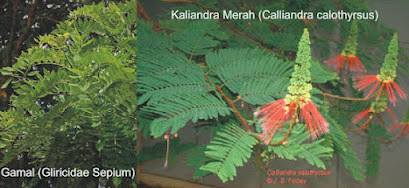
composition of energy plantation leaves such as calliandra and
gliricidia is protein and this protein element is an important and most
expensive component compared to other elements of animal feed. With a
large volume of leaves from energy plantations, it should support the
livestock industry and not just be thrown away because it is just a
by-product or waste that is less useful. In fact, from the livestock
industry side, the opposite is true. The utilization of these leaves can
be used directly on livestock or processed into animal feed in a
processing industry depending on the local situation and conditions.

Large farms can be
made from the utilization of energy plantation leaves as well as animal
feed factories from the leaves. Leaf pellet production can be done with a
production process similar to wood pellet production so that a wood
pellet factory adjacent to a leaf pellet factory is also very possible.
Like export-oriented wood pellet products, leaf pellets can also be the
same. Meanwhile, if a large farm is to be carried out, waste from the
livestock farm or animal waste can be used as raw materials / substrates
for biogas production. The biogas can then be used for drying in the
production of wood pellets or leaf pellets or used for electricity
production. The residue from the biogas will become organic fertilizer,
either solid organic fertilizer or liquid organic fertilizer. A simple
diagram as below.


Thousands of cattle
or breeding cattle are imported into Indonesia from Australia and New
Zealand and cattle fattening is a promising business in Indonesia
because the need for beef has not been met until now. The shortage of
beef is met by importing buffalo meat from India and beef from Brazil.
Support for the availability of abundant and quality feed is one of the
important aspects of self-sufficiency in this meat. In addition to
cattle, the need for goats and sheep is also very large. Yogyakarta, a
city that is also famous for its goat satay cuisine, needs more than
1500 heads of sheep per day. In addition, the need for aqiqah and Eid
al-Adha is also very large. The sheep export market is also very
promising, which until now has not been met due to various factors, one
of which is the feed factor. Feed in the livestock business plays a very
important role or even around 70% of the cost of livestock is the cost
of the feed. And livestock is a link in the chain of food needs for
humans so that it is inseparable.